
Case study
Loyalty program: +16% orders and +22% revenue within a year of launch (study of 69 restaurants)
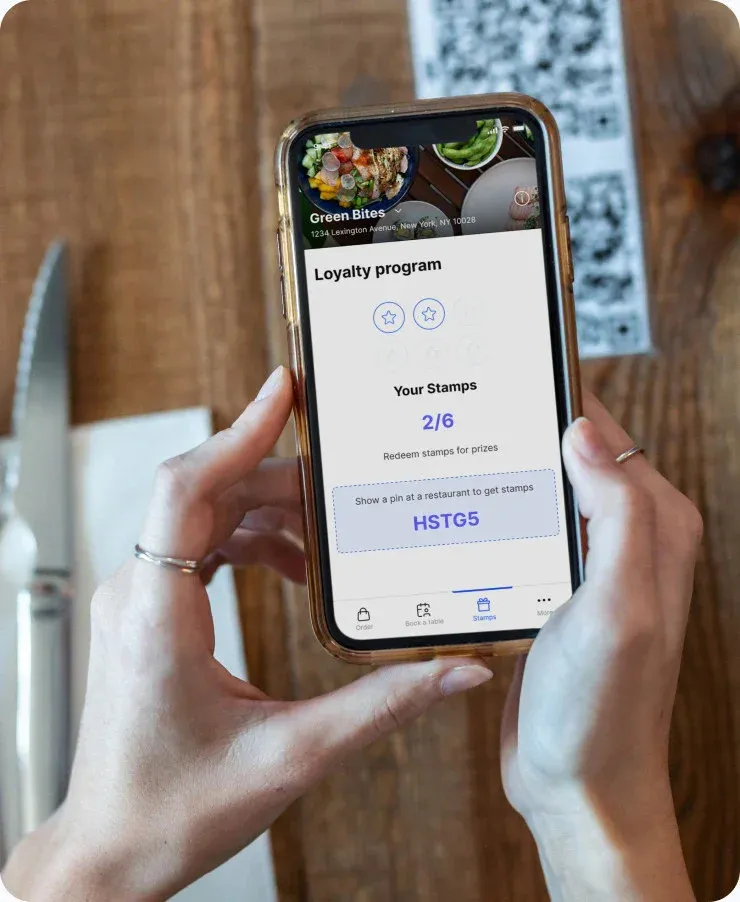
A loyalty program is — alongside your ordering website and your own mobile app — one of the pillars of building a sales channel you actually own.
But does it really pay off? And does it actually do what it promises — increase guest loyalty?
We checked it on hard data. We compared the results of 69 restaurants in the year before launching a loyalty program and the year after.
The result is more interesting than we expected. The program genuinely increases sales — and significantly. But it does so differently than popular belief suggests: it doesn’t make your regular guest order more often.
It makes the restaurant acquire and keep more customers.
Results
A year after launch, restaurants record 16.5% more orders.
Revenue grows faster than the number of orders (+21.7%) — because the basket value grows too.
The heart of the effect is a bigger customer base: +15.3% year over year.
The average order value rises from 100 to 104.5 PLN.
Sales went up in 52 of 69 restaurants — regardless of size and country.
Key Takeaways
What does this mean for your restaurant? Based on this data, by launching a loyalty program you can expect:
Want something similar for your own restaurant? Get in touch
A loyalty program doesn’t make regulars order more often — it helps you win and keep more customers. And real loyalty only begins with the first reward claimed.
The Solution
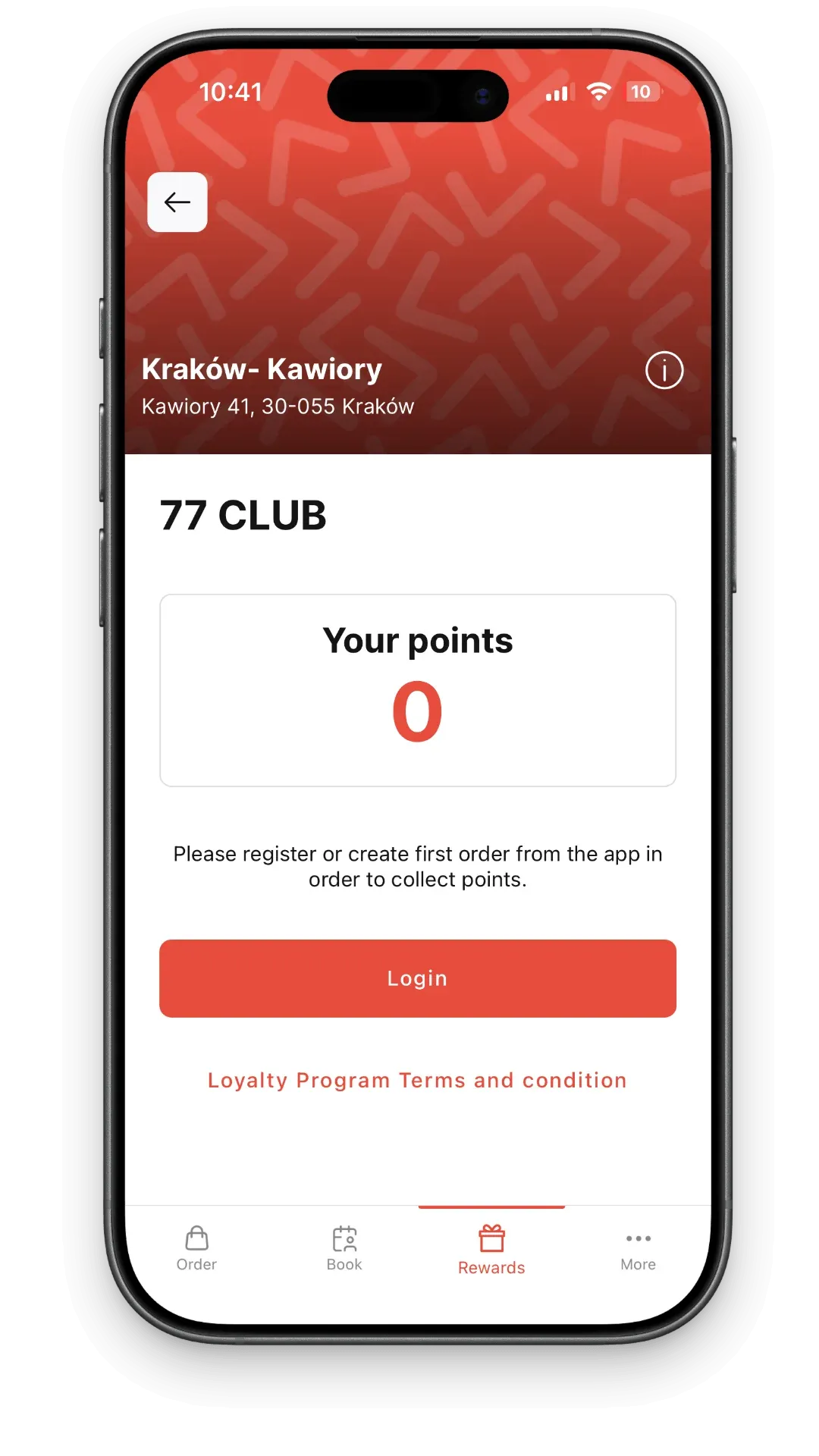
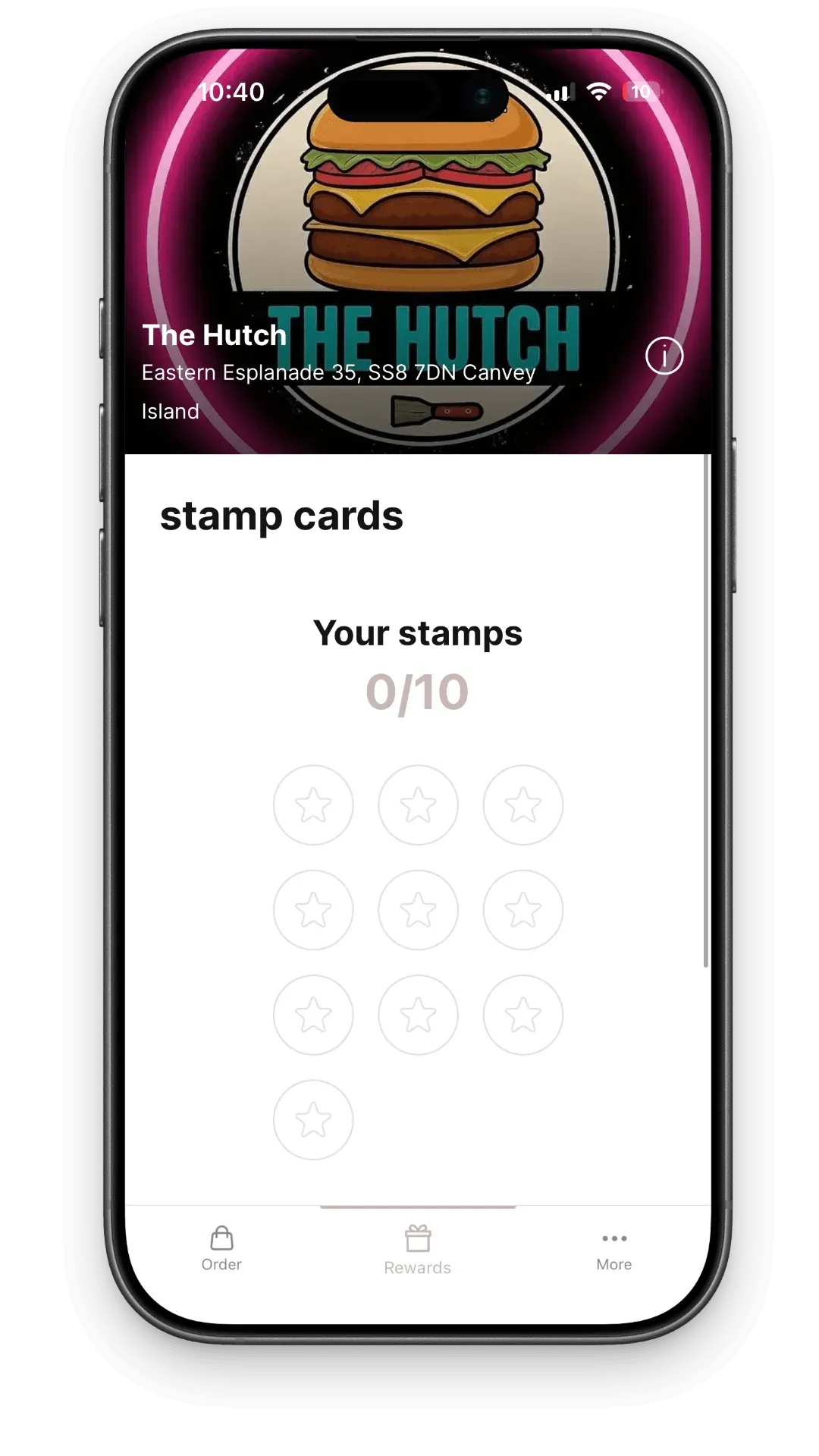
The loyalty program module lets customers earn points or stamps on their orders and redeem them for rewards. More about the loyalty program.
How it works:
- Set up the program in minutes — you decide the rules: points or stamps for orders, plus the rewards for your regulars.
- Customers earn points automatically — on online orders and in-store visits.
- Customers redeem points for rewards — once they’ve collected enough, they claim discounts, free items, or special offers.
UpMenu program benefits:
- Earns points on both online orders and in-store orders.
- Points are added automatically after every order — no extra work for your staff.
- No plastic card needed; the customer’s loyalty card is simply their account in your app or on your website.
- You set the rules. Choose whether guests collect points or stamps, how much they earn per order, and what rewards they can claim.
- The program is connected to the rest of UpMenu’s marketing tools — your customer database (CRM) and email, SMS, and push campaigns. So you can, for example, automatically remind customers who’ve earned points but haven’t ordered in a while.
Sample restaurants and their results
We analyzed each restaurant individually — different cuisines, different countries, different sizes. Below are a few examples that entered the analysis (threshold: at least 100 customers in the period after launch).
Restaurant | Country | Customers (after launch) | More orders | Higher revenue |
|---|---|---|---|---|
Mr’Jerry Steakhouse | PL | 2,962 | +22% | +29% |
Sushi Kushi Kraków Mogilska | PL | 2,288 | +22% | +34% |
Sushi Kado | PL | 1,960 | +37% | +49% |
Sushi 77 Poznań | PL | 1,975 | +19% | +30% |
Micha (Micha Zupa Bar) | PL | 1,389 | +19% | +42% |
Pizzeria K2 Zduńska Wola | PL | 1,309 | +15% | +41% |
Silvio’s Crumlin | IE | 1,307 | +9% | +14% |
Silvio’s Nutgrove | IE | 1,489 | +1% | +4% |
The Hutch | GB | 527 | +40% | +59% |
Aruba Experience | AW | 486 | +114% | +64% |
Every customer collecting points with you is a customer you don’t lose to the delivery portals. You build your channel, your base, your sales.
How we ran the study (read if you like the details)
The method
We examined what happens to a restaurant’s sales after launching a loyalty program. For each location we compared two symmetrical windows: 12 months before the program’s launch and 12 months after. As the launch moment we took the date of the first point ever awarded in the program.
We calculated the results by summing orders, revenue and customer counts across all locations — this lets us reliably check whether the program works and limits the inflation of results by the largest restaurants. We excluded cancelled and unpaid orders, as well as test accounts.
Who made it into the study
To keep the study credible, out of 315 restaurants with an active loyalty program we admitted only those we could compare fairly — with a full year of sales data both before the program’s launch and after it. 69 restaurants met this condition; the rest were excluded because they lacked a complete window before or after launch.
Study results
In absolute numbers: the same locations placed 221,064 orders in the year before the program and 257,592 in the year after (+16.5%), and revenue rose from 22.1M to 26.9M PLN (+21.7%). The number of customers grew from 90,143 to 103,962 (+15.3%).
Verifying the results
Comparing “before vs after” is a strong method, but not a perfect lab experiment. That’s why we checked the result in seven independent ways — all point in the same direction:
- Control group — is it just the market? We took 458 restaurants without a program and checked how their activity changes between the first and second half of their history. Without a program, locations barely grow: customer count changes by +0.8%, orders by +2.9%. Meanwhile locations with a program grow by +15% customers and +16% orders. The growth therefore doesn’t come from the market or from a location’s natural development.
- Year-over-year base stability. Orders per customer across all of UpMenu are flat: 2.51 (2023), 2.53 (2024), 2.54 (2025). Since the average customer doesn’t order more often on their own, the jump after launch isn’t an effect of a general trend.
- The durability curve — is it just a “novelty effect”? We calculated the effect across three windows: +7% after a quarter, +11% after six months, +16% after a year. The effect doesn’t fade — it builds. It’s not a brief burst right after launch.
- Consistency restaurant by restaurant. 3 in 4 locations (52 of 69) recorded an increase in orders, and the median uplift (+15%) matched the overall result — the effect is a rule, not an average hiding failures.
- Location age at launch. We checked whether the program doesn’t happen to launch right after a venue opens (which would confuse program growth with the “youth” of the business). On the contrary: restaurants launched the program on average 2–3 years into operation (median 27 months) — none in the first year. So the “before” window catches the location in full swing.
- Real customers, not duplicate accounts. We also calculated the growth by unique e-mail addresses (not account records) — it came to +14.2% versus +15.3% counted by accounts. The difference is minimal and the level of duplicates stable. “+15% customers” means real people, not multiplied accounts.
- Acquisition, not reactivation. Among customers active in the year after launch, as many as 64% are people who had never ordered at the given restaurant before. The base growth is a genuine influx of new guests, not just returns of old ones.
Important caveat. We didn’t randomize which locations launch the program, so this is not a lab experiment. The most convincing thing is the consistent picture from the seven checks above. We also deliberately show the full truth about the mechanism: the program increases sales by expanding the customer base, not by increasing the ordering frequency of existing guests — and real loyalty (3.7× more frequent orders) appears only among customers who claim rewards.
Date of the study
June 2026 (analysis of system data as of June 28, 2026).
Period studied
Data from April 2015 to May 2026.
Scope of data analyzed
69 restaurants from 5 countries (Poland, Ireland, United Kingdom, Aruba, Belize), out of 315 restaurants with an active loyalty program (246 excluded due to an incomplete order window before or after launch). The analysis covered 478,656 orders and over 157,000 unique customers. Additionally, as part of the engagement analysis, we examined 105,078 loyalty program members across these locations.