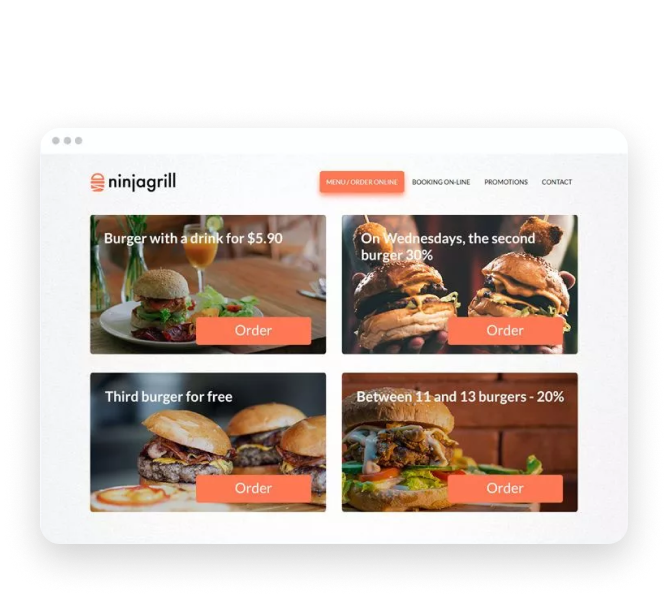
Restaurant Email Marketing (Examples & How to Do It)

Email marketing stands as one of the most effective ways to reach your customers. After all, who doesn’t like getting a 30% discount on their favorite food every once in a while? When done correctly, email marketing is definitely one of the best ways to market your restaurant.
In this article, we’re going to discuss:
- What is email marketing: common misconceptions
- What makes a successful email marketing campaign
- How to build a restaurant email marketing strategy
- What are some of the best email marketing examples in the industry
What is restaurant email marketing: common misconceptions
Restaurant email marketing is like sending out digital invites, news, and special deals straight from your kitchen to your customers’ inboxes. It’s a cozy way to say, “Hey, we’ve got something cooking you might like!” Despite its perks, some folks get the wrong idea about what it’s all about. Let’s clear up a few of those myths.
WiFi Marketing For Restaurants
- Outdated? Nope: Just because there are social media and push notifications doesn’t mean emails are not derelict. 50% of customers prefer to hear from restaurants via email. Emails are like a reliable friend who’s always there, delivering solid results without a lot of fuss.
- An Inbox Pest? Hardly: Yes, we all get tons of emails, but it’s not about the quantity. It’s the tasty morsels of content that count. Pick your target market and send the messages that they will want to hear, not what you want them to hear.
- More is More? Think Again: Bombarding people with emails faster than they can say “unsubscribe” is a surefire way to be forgotten. It’s all about hitting that sweet spot – enough to keep you on their radar without becoming inbox clutter.
- Just Deals and Steals? Nah: Sure, everyone loves a good deal, but your emails can be so much more. Share your story, introduce the team, spill some kitchen secrets, or ask for feedback. Mix it up!
- One Size Fits All? Nope: Imagine if every dish you served was exactly the same. Boring, right? The same goes for your emails. Spice things up by tailoring your messages to match what different folks might want. It makes all the difference.
- Sales or Bust? Not Exactly: If you’re only looking at the cash register to measure success, you’re missing out. Building a community of loyal fans, getting people excited about your brand, and having them engage with your content are all wins, too.
Getting restaurant email marketing right is about keeping it real, personal, and tasty. Avoid these misconceptions and watch your digital relationship with your customers flourish – just like a well-tended garden.
What makes a successful email marketing campaign
A successful email marketing campaign is like cooking up a signature dish. It requires the right mix of ingredients, timing, and presentation to make it memorable and effective. Here’s how you can whip up an email marketing campaign that leaves your subscribers craving for more.
- Know Your Audience: This is like picking the right ingredients for your dish. Understand who you’re cooking for. What do they like? When do they eat? Tailoring your content to fit the tastes and preferences of your audience ensures that your emails are always a hit. If you don’t know where to start, start with a restaurant marketing plan.
- Catchy Subject Lines: Your needs to be inviting and intriguing enough to make customers want to open your email. A good subject line can make the difference between an email that gets savored and one that goes straight to the trash. If you’re giving 30% off on the next order, make sure it’s the first thing your customer sees.
- Get to the Point: Sales emails are sales emails. You’re selling a product, not entertaining. Make your emails concise and get to the point. Present the offer, add a call to action and a button. Very straightforward.
- Stick to the Schedule: Whether it’s a Valentine’s or Christmas campaign, make sure you plan ahead and start early. You don’t want to send your first email on the day of the event. Decide on the number of messages, pick the date range, and stick to your schedule.
- Visual Appeal: We eat with our eyes first, right? The same goes for emails. A visually appealing email with images of food can enhance your message and make it more… digestible.
- Personalization: Adding a personal touch to your emails makes your subscribers feel like they’re getting special treatment. Use their name, recommend items based on past purchases, or send them birthday wishes. Small touches can make a big impact.
- Clear Call-to-Action (CTA): This is like giving your diners clear instructions on what to do next – “Try this,” “Order now,” “Reserve your seat.” A strong, clear CTA guides your subscribers towards the next step you want them to take, making it easy for them to engage further with your brand.
- Testing and Optimization: The best chefs always taste and tweak their dishes before serving. Similarly, use A/B testing for your emails to see what works best. Test different subject lines, content formats, and sending times to refine your strategy.
- Monitor Performance: Finally, keep an eye on how your campaign is doing. Look at open rates, click-through rates, and conversions to understand what’s working and what’s not. This feedback is like customer reviews for your dish, helping you to continuously improve.
- Multichannel approach: Understand that email marketing is just a piece of the puzzle. Most companies will use all of their marketing channels, including social media, push notifications, and websites to promote their next big thing.
The secret to a successful email marketing campaign lies in blending creativity with precision. By focusing on your audience, crafting engaging content, and refining your approach based on feedback, you can create email marketing campaigns that not only reach the inbox but also resonate with the hearts (and stomachs) of your subscribers.
How to build a restaurant email marketing strategy
Building a restaurant email marketing strategy is like planning a menu for a big event. You need to consider your guests’ preferences, the theme of the event, and how each course will contribute to an unforgettable experience. Here’s a step-by-step guide to help you create an email marketing strategy that’s as compelling as your restaurant’s menu.
Crafting a successful email marketing strategy for your restaurant is about combining the right ingredients: understanding your audience, delivering mouth-watering content, and continually refining your approach based on feedback and results.
Most important, however, is to make sure that your restaurant email marketing campaigns go in line with your overall restaurant marketing strategy.
What are some of the best email marketing examples in the industry
Everyone has restaurant email marketing strategies until they get punched in the mouth – Mike Tyson (I think).
To run a successful email marketing campaign, you’ll have to learn from the best. Let’s go over some of the top companies in the industry so that you have a good understanding of how to plan email marketing for restaurants.
1. McDonald’s Restaurant Email Marketing Campaign
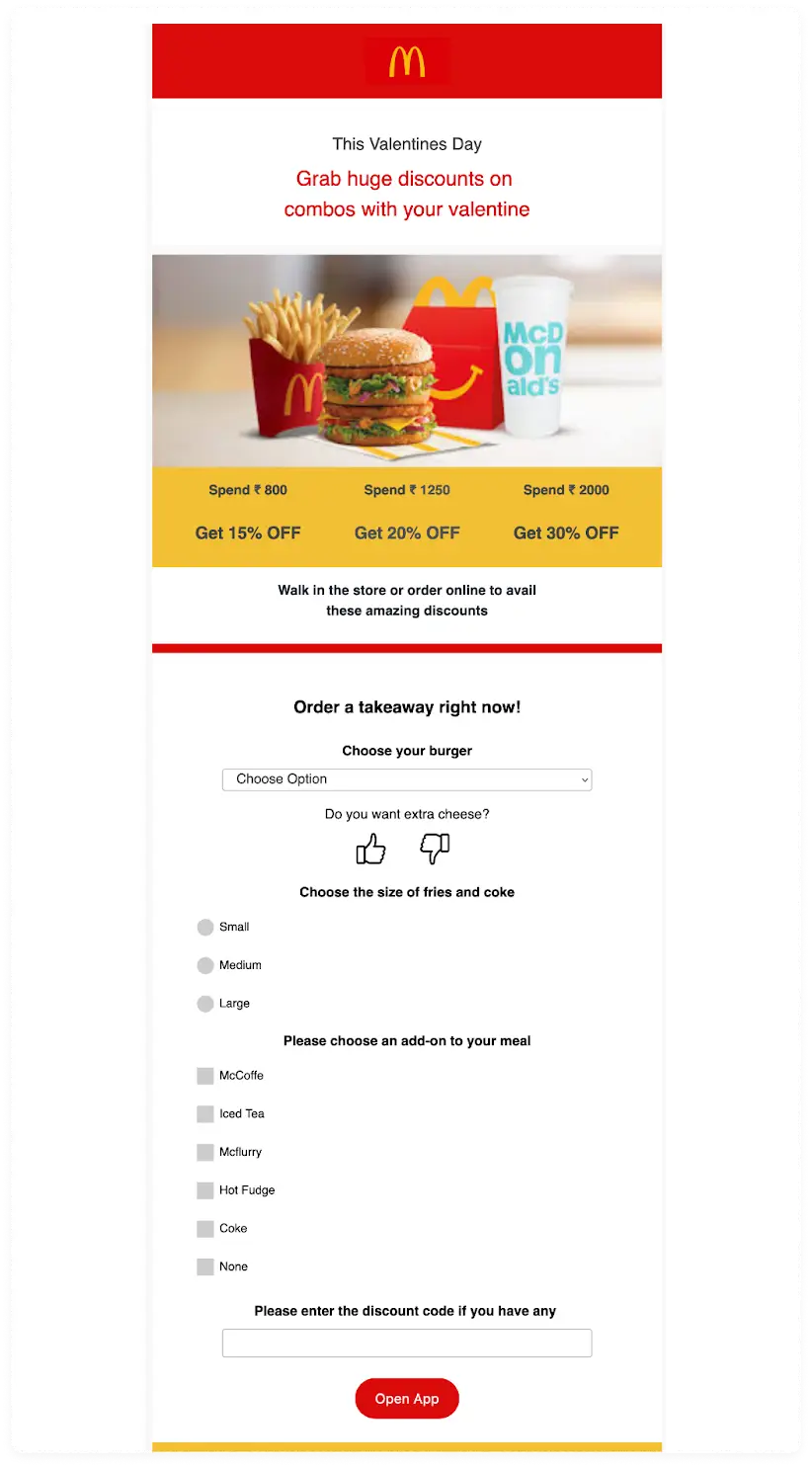
Little talk, lots of action. Upcoming events and holidays are a good way to test your email marketing prowess. McDonald’s gets it. It keeps it real and understands that an average person does not have the time to read elaborate emails from a restaurant.
Look at the text-to-action ratio. The email is a perfect example of how to approach young, impatient customers who simply want to get right to the gist of things and see if the offer is a steal or not.
McDonald’s offers a generous discount and makes it really easy for customers to claim it. If you can do it like this, you will do very well in your email campaigns.
2. Jefferson’s
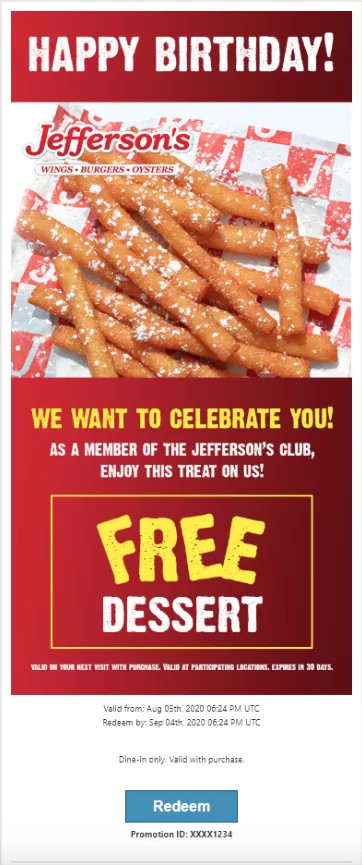
The second on our list of email marketing ideas is Jefferson’s, with their top-notch use of enticing imagery. Honestly, can you even think of anything else but these delicious fries?
They get straight to the point and tell you exactly what you’re getting. Want a free dessert? Come visit Jefferson’s. That’s how email marketing should be done.
3. Chipotle
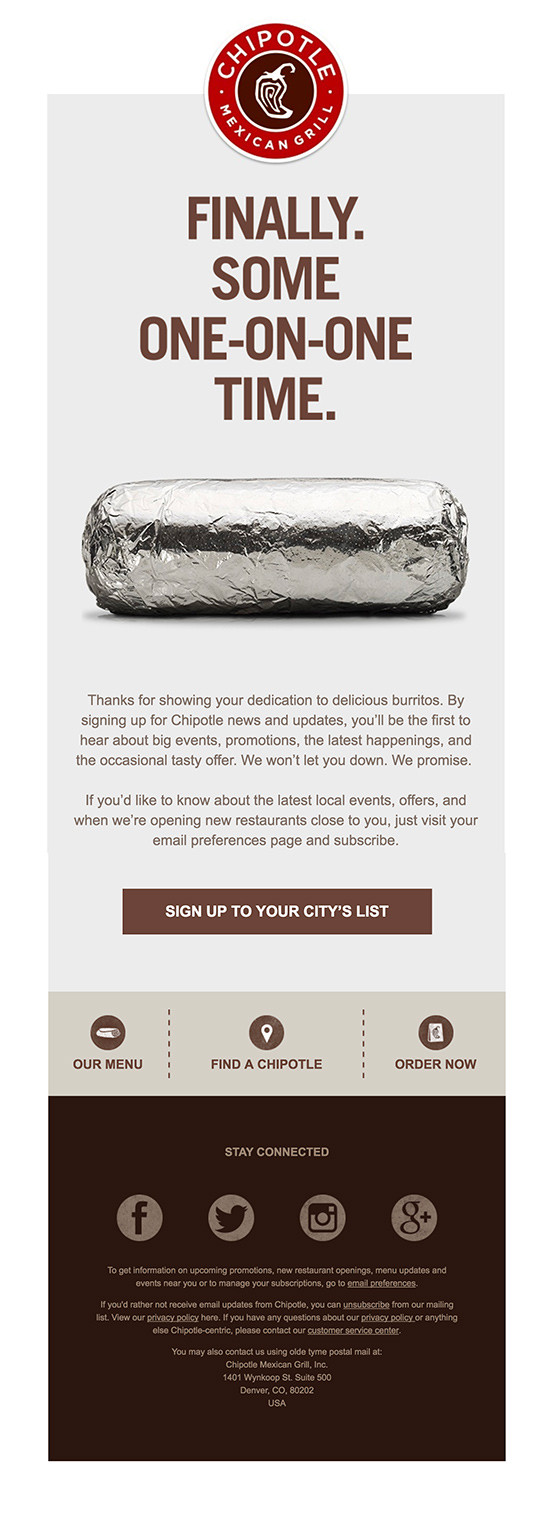
Most restaurants know that nothing comes free. Filling out a boring email signup form has to come with a reward, or it won’t come at all. If you want to build your mailing list, you’re going to have to give something in return. Chipotle gets it.
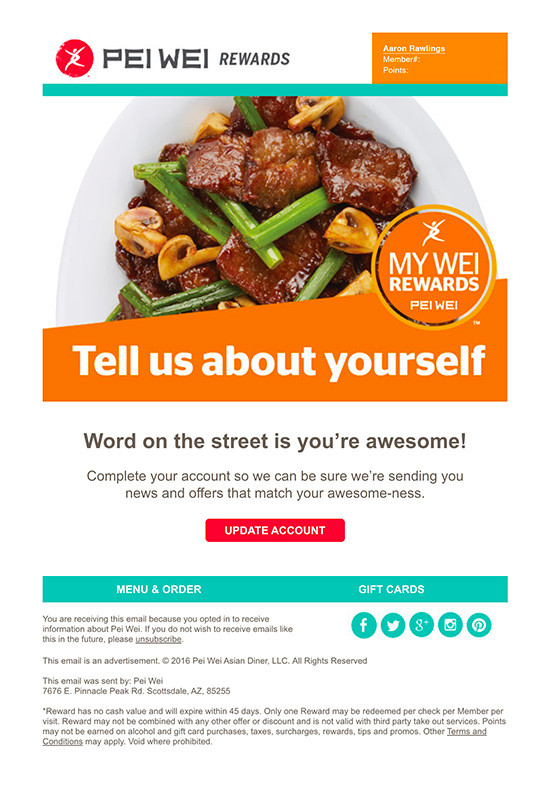
4. Pei Wei
If you’re trying to build your customer base and are aiming for marketing automation, you’re first going to need some customer data. To do that, you’re going to need a little bit of enticement as well.
5. Patina Restaurant
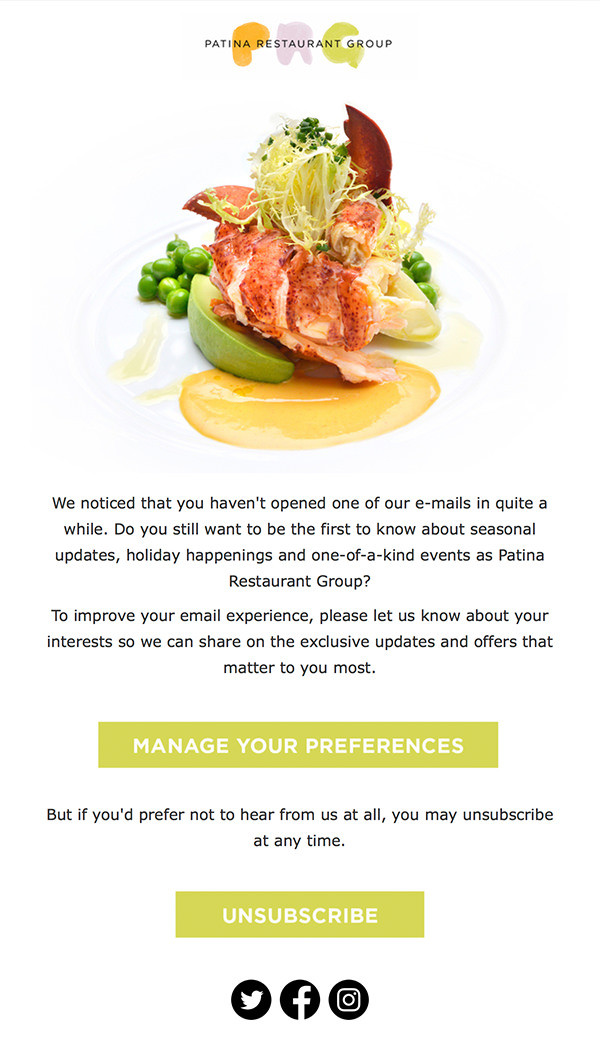
It’s not always easy to keep all customers coming back, even with the best marketing efforts. At some point, however, you’ve got to try and poke around to see if you can win some of your customers back.
The best way to do it, is of course, by giving away a free meal or another offer that actually works for them. If it’s not something you can afford, consider asking for some feedback.
Frequently Asked Questions (FAQ)
The best marketing for restaurants effectively combines a robust email marketing solution, a strong digital presence, and distinctive restaurant branding. Utilizing an email marketing solution enables restaurants to directly engage with their customer base, offering personalized promotions, updates, and news that encourage repeat visits and build loyalty.
A comprehensive digital presence, encompassing an easy-to-navigate website, active social media channels, and favorable online reviews, ensures that the restaurant remains visible and attractive to both new and returning customers.
Lastly, consistent and compelling restaurant branding across all platforms and communications helps to establish a memorable identity, differentiating the restaurant in a competitive market. Together, these strategies create a comprehensive marketing approach that can significantly enhance customer engagement and drive business growth.
Restaurants attract more customers by showcasing their brand identity through engaging social media pages, targeted email campaigns, and a compelling loyalty program. Effective branding and marketing emails build recognition and connection, while social media offers a platform for promotion and interaction.
A restaurant loyalty program encourages repeat business by rewarding frequent visits. Additionally, hosting special events can draw in new patrons and create buzz. Together, these strategies enhance visibility and foster customer loyalty, driving both new and repeat business.
About the author

Senior Content Writer
Creative digital writer and marketer. A caffeine-fueled madman who loves to make things better.