
Takeaway Sales Strategy: How it Works in Restaurants
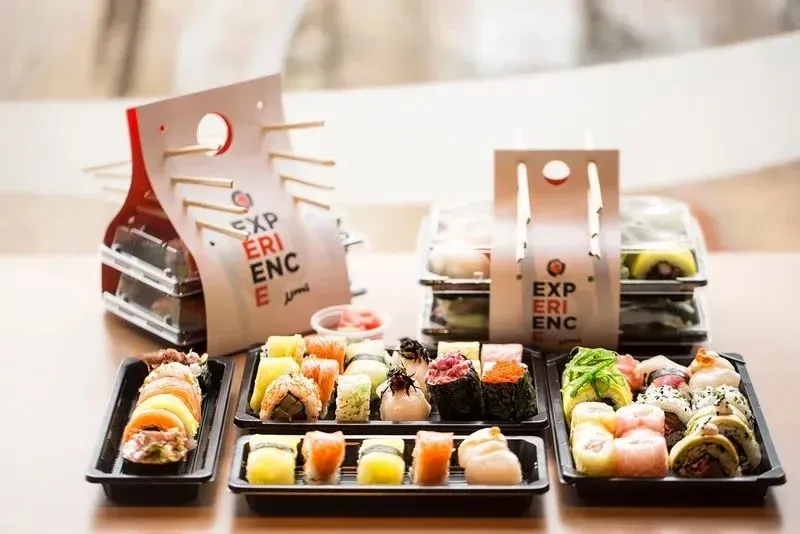
The takeaway sales strategy is a closing technique in which the seller deliberately pulls an offer back – by limiting it, removing part of it, or questioning whether the buyer is the right fit – so that an interested but hesitant buyer moves to reclaim it.
Instead of pushing harder, you step back. It works because people value things more once they risk losing them, and it only works on buyers who already want what you sell.
What is the takeaway sales strategy?
Takeaway selling, also called the takeaway close, reverses the usual sales motion. A typical seller pulls the buyer toward the deal with more benefits, more follow-ups, and a better price. A takeaway seller does the opposite at the decisive moment and makes the offer slightly harder to get.
Direct-response marketer Dan Kennedy popularized the idea in his No B.S. sales books, where the seller positions themselves as selective rather than available. In practice, a takeaway sounds like "This package may be more than you need" or "We take four catering bookings per weekend, and three are gone."
A takeaway is not a pressure tactic on its own. If the buyer isn't interested, taking the offer away simply ends the conversation – which is also useful, because it disqualifies them quickly.
Takeaway selling vs. scarcity, urgency and discounts
These terms are often used as synonyms. They are related tools with different mechanics:
Tactic | What changes | Typical line | Main risk |
|---|---|---|---|
Takeaway close | The seller withdraws or limits the offer | "This may not be the right fit for you." | The buyer walks away if interest was low |
Scarcity | Supply is limited | "Only 20 portions tonight." | Lost credibility if the limit is fake |
Urgency | Time is limited | "The offer ends Sunday." | Deadline fatigue if every week has one |
Discount | Price goes down | "20% off this week." | Customers learn to wait for deals; margin drops |
A takeaway can use scarcity or urgency as its vehicle, but the core move is always the same: something the buyer already considered theirs becomes less available.
Why the takeaway close works: 3 psychological mechanisms
Reactance. When people feel a freedom is threatened, they become motivated to restore it. Psychologist Jack Brehm described this psychological reactance in 1966: tell buyers they might not get something, and many want it more.
Loss aversion. Once buyers imagine owning the product, not getting it feels like a loss rather than a missed gain. A 2024 meta-analysis of 607 loss-aversion estimates puts the average coefficient at 1.955 – losses weigh roughly twice as much as equal gains.
The change-in-supply effect. Sudden scarcity beats constant scarcity. In a classic 1975 cookie-jar experiment, cookies whose supply dropped from abundant to scarce were rated more valuable than cookies that were scarce all along. That drop is exactly what a takeaway creates.
When to use the takeaway close (and when not to)
Buyer signal | Use a takeaway? | What to do |
|---|---|---|
Asking questions, replying fast, booking calls | No | Keep the momentum and close |
Interested but stalling for weeks | Yes | Withdraw one element or question the fit |
Not interested, not responding | No | Nurture the lead or let it go |
Negotiating hard on price | Yes, carefully | Take away scope, not goodwill |
Only take away what you are genuinely willing to lose. If you reinstate a "final" offer the next day, the buyer learns that your limits aren't real.
5 takeaway close examples you can adapt
- Fit takeaway: "Honestly, our full catering package may be more than your team needs. Should we look at the drop-off menu instead?" Buyers often defend the bigger option.
- Feature takeaway: "If budget is the concern, we can remove the dessert station and service staff and quote just the food." Removing a visible benefit makes its value tangible.
- Capacity takeaway: "We cap private dining at two events per Saturday, and one is booked. I can hold the second until Thursday."
- Time takeaway: "The rehearsal-dinner price I quoted holds until Friday; after that, peak-season rates apply." Use it only if the rate change is real.
- Walk-away takeaway: "It sounds like the timing isn't right. Should we close this for now and revisit in the spring?" On stalled deals, this often surfaces the real objection.
Scripts 1–4 fit event and group sales best. If that's a growth channel for you, here's how to get more catering clients.
How restaurants use the takeaway sales strategy
Most restaurant sales aren't negotiated one-on-one, but the same principle scales through your menu, ordering channels, and loyalty program.
Limited-time items are the most visible version: 55% of consumers say limited-time offers matter when they decide where to eat, and Technomic counted 41,707 LTO launches in 2025, up from 16,187 in 2019.
Play | What you take away | How to run it | Honesty rule |
|---|---|---|---|
Limited batch | Portions | Cap a signature item and mark it sold out in online ordering when it's gone | Cap only what prep or ingredients genuinely limit |
Real-deadline LTO | Menu access | Launch a limited-time menu item with a fixed end date and remove it on that date | Never extend a "last chance" item |
Capped pickup slots | Pickup times | Open a set number of holiday or weekend slots through a pre-order system | Show real remaining capacity |
Expiring rewards | Loyalty points | Remind members before points or perks expire | Publish expiry rules up front |
Event deals | Dates and package elements | Hold a date for a set time, or remove scope instead of cutting price | Honor every hold you promise |
Expiring rewards deserve special attention. In our study of 69 restaurants that launched a loyalty program, only 11% of the 105,000 customers collecting points ever redeemed them – yet active members ordered 3.7× more often than the rest.
A clear expiry date communicated through your restaurant loyalty program turns dormant points into a gentle takeaway: use them or lose them. We plan to add automatic point notifications and expiry dates in UpMenu for exactly this reason.
A takeaway message that works: "Friday's smoked brisket is back – 40 portions only, because each one smokes overnight. Pre-order your pickup slot now; the next batch is in two weeks." Send it via text message marketing to guests who have ordered brisket before.
When an item sells out, redirect guests with suggestive selling toward the closest alternative, so the takeaway doesn't cost you the order.
Takeaway selling mistakes that damage trust
- Fake scarcity: "Only 3 left" on a dish you can make all night is easy to spot, and it discredits every future limit.
- Constant deadlines: if every week has a "last chance" offer, none of them feel final.
- Taking away from cold leads: a buyer who doesn't want the offer won't miss it. Build interest first.
- Defaulting to discounts: diners spend 26% more on average when they buy an LTO, according to Technomic. A real limit can lift the check; a discount lowers it.
Looking to grow takeout orders instead?
In restaurants, "takeaway sales strategy" can also mean a plan to sell more takeout. That's a different job from the takeaway close, and it starts with owning the ordering channel:
Lever | What to do | Learn more |
|---|---|---|
Direct ordering | Accept takeout orders on your own website and app instead of paying marketplace commissions | |
Pickup experience | Offer fast, clearly marked pickup points and ready-time updates | |
Delivery growth | Grow delivery alongside pickup |
Michelangelo 301, a Florida pizzeria, processed 23,269 direct online orders in 12 months (March 2023–March 2024). 51% came through its branded app, saving $129,474 in third-party commissions.
About the author

Marketing Manager
Leads UpMenu's marketing and helps restaurants grow. Writes about restaurant marketing, branding, websites, menu design, and opening a restaurant — from pizzerias and food trucks to coffee shops and ghost kitchens. Digital marketer driven by data and AI — for 6+ years working with restaurants.