


What are Restaurant Loyalty Programs?
Restaurant loyalty programs are strategies that reward customers for coming back. When you join, you earn rewards, points, or stamps for each visit, purchase, or dollar spent.
The primary goal of a restaurant loyalty program is to build strong, long-term relationships with customers, boost retention, increase how often people visit, and grow restaurant revenue.
The behaviour is widespread: according to Deloitte’s restaurant loyalty research, nearly half (47%) of loyalty program members use their memberships several times a month, while almost a third (32%) use them several times a week.
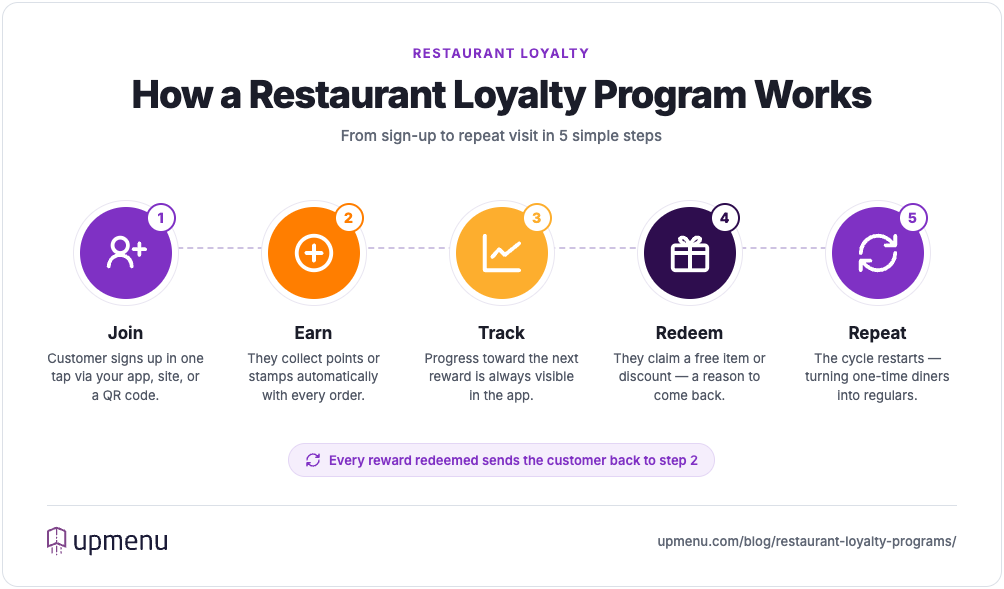
A restaurant loyalty program usually includes the following components:
- Joining: customers become members, usually through a branded mobile app, website, or a physical card.
- Earning rewards: customers collect points or rewards for each purchase or visit.
- Tiers or levels: some programs use a tiered structure, where members unlock bigger benefits as they accumulate points.
- Incentives: members get discounts, free food (a free coffee or beverage), or special offers as a thank-you for their loyalty.
- Personal touch: many programs use data to personalise offers and recommendations.
- Staying in touch: restaurants message members by email, text, or app about new deals and bonus rewards.
Types of Restaurant Loyalty Programs
There are seven main types of restaurant loyalty programs. Points-based programs are the most common; tiered programs drive the highest spend.
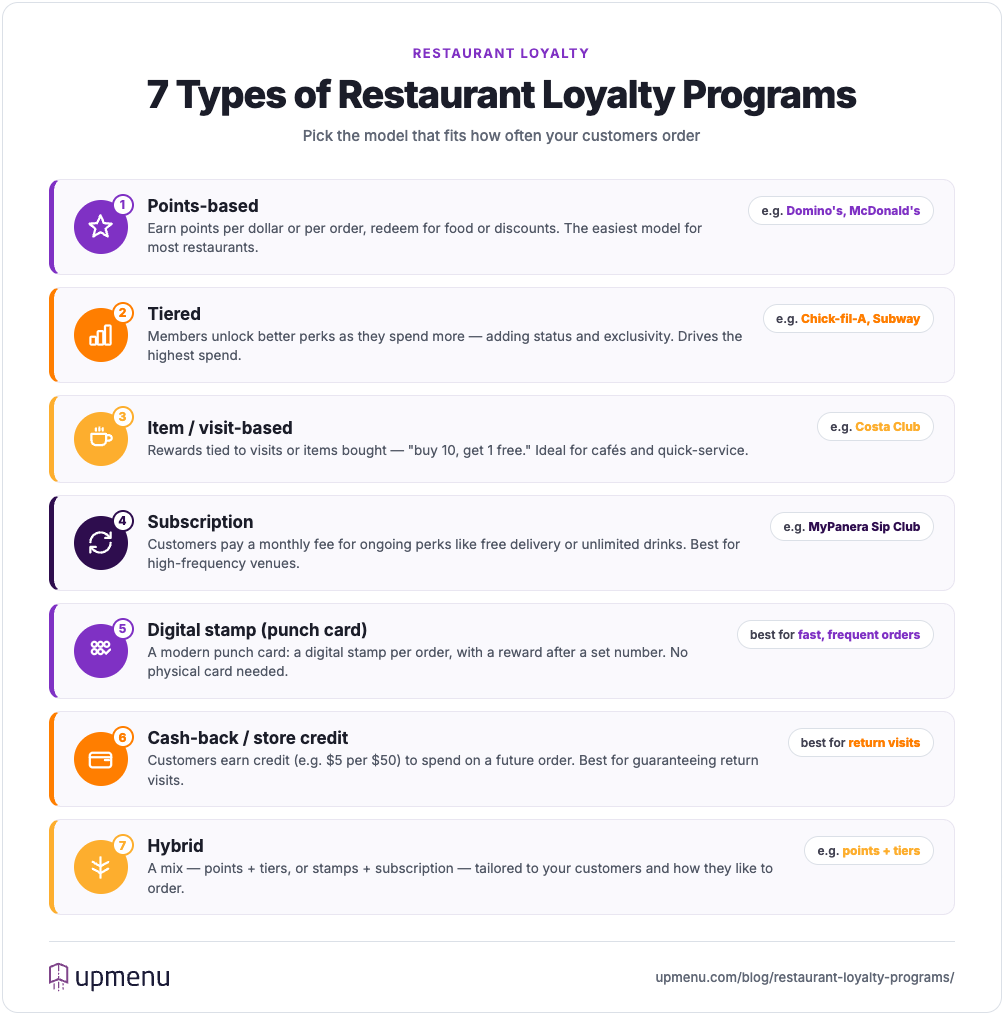
- Points-based: customers earn points per dollar (or per order) and redeem them for food or discounts. Best for most restaurants. Example: Domino’s, MyMcDonald’s.
- Tiered: members unlock better perks as they spend more, adding status and exclusivity. Best for building long-term regulars. Example: Chick-fil-A One, Subway MVP.
- Item / visit-based: rewards are tied to a number of visits or items bought (“buy 10, get 1 free”). Best for cafés and quick-service. Example: Costa Club.
- Subscription: customers pay a monthly fee for ongoing perks like free delivery or unlimited drinks. Best for high-frequency venues. Example: MyPanera Sip Club ($14.99/month).
- Digital stamp (punch card): a modern punch card: a digital stamp per order, with a reward after a set number. Simple, no physical card. Best for fast, frequent orders, especially through restaurant apps.
- Cash-back / store credit: customers earn credit (e.g. $5 per $50) to spend on a future order. Best for guaranteeing return visits.
- Hybrid: a mix (e.g. points + tiers, or stamps + subscription) tailored to your customers.
Which to choose? Start with points or digital stamps if you want simplicity, add tiers once you have repeat regulars, and layer a subscription only if customers already order frequently.
1. Chipotle Rewards
Chipotle Rewards offers customers points for every purchase, which can be redeemed for free food.
New members receive a free guacamole reward on their next order, and members enjoy exclusive offers, birthday rewards, and early access to promotions. Points accumulate through both in-store and online orders, helping drive repeat business.
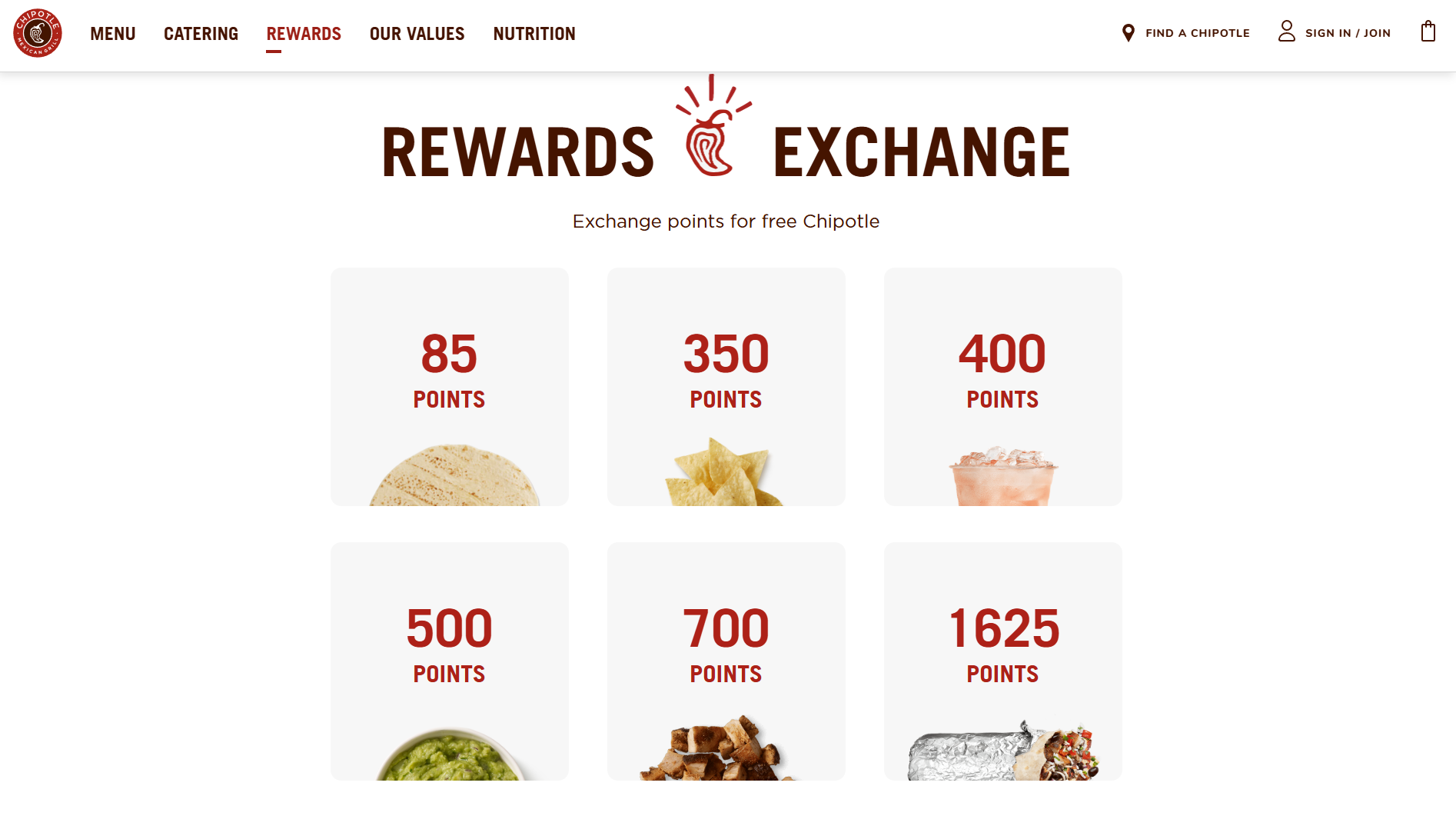
Program type: Points-based
What I’d take from Chipotle Rewards:
- Make the app the centre of the experience: encourage customers to download and use your app to track points, redeem rewards, and get free food. Promote it through in-store signage and digital marketing.
- Celebrate birthdays: add a birthday reward and promote it through the app — it’s a simple way to drive a visit.
- Promote exclusive offers: use the app to send members-only deals and refresh them regularly to incentivise repeat visits.
2. Domino’s Rewards
Domino’s Rewards is a simple, effective program that awards points for every $10 order. Once you reach 60 points, you can redeem them for a free medium two-topping pizza.
It’s available across phone, in-person, online, and the app, making it accessible to all customers.
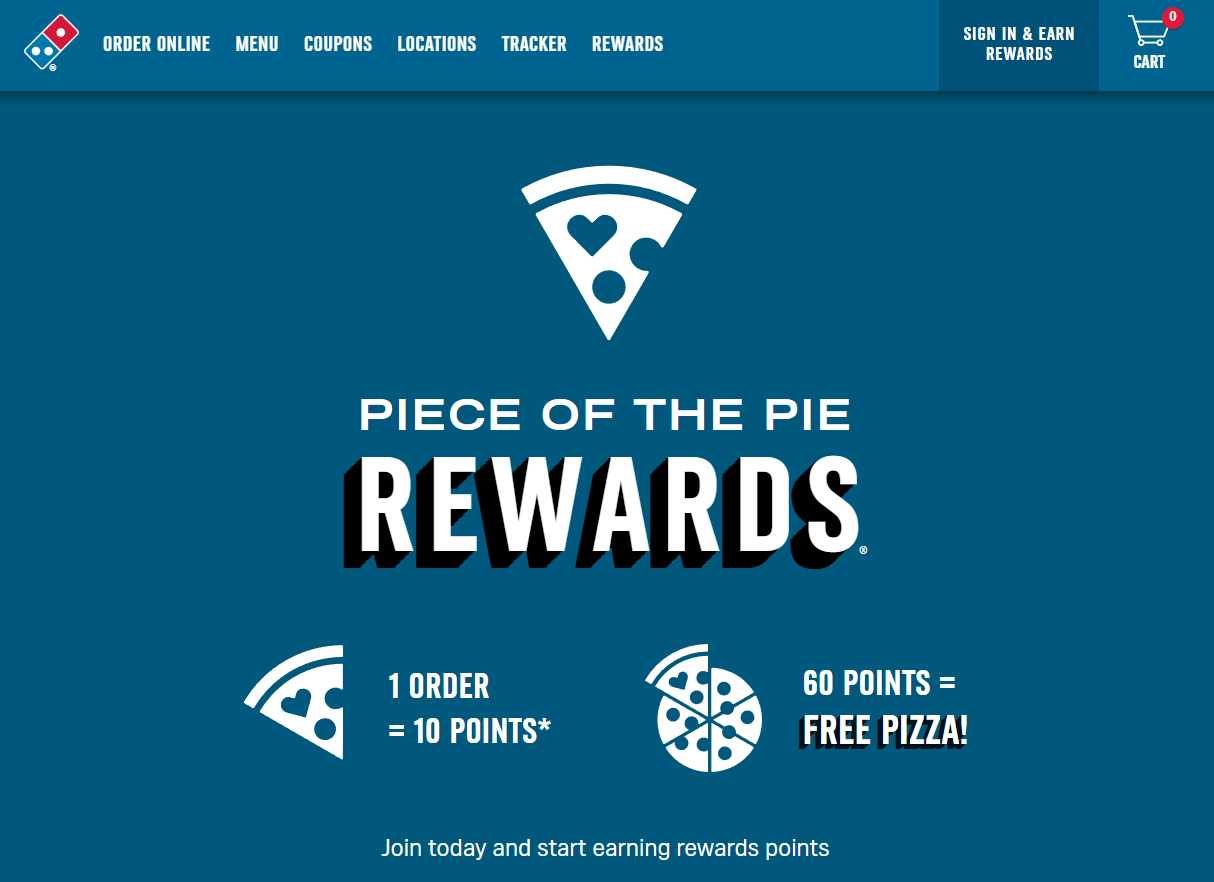
Program type: Points-based
What I’d take from Domino’s Rewards:
- Enable flexible ordering: let customers earn points through phone, in-person, online, or app orders, and promote that flexibility.
- Maximise multiple rewards: Domino’s lets customers redeem up to 5 free pizzas in 24 hours — generous redemption encourages frequent orders.
- Make tracking easy: ensure customers can clearly see their points and redeem rewards in the app.
3. Starbucks Rewards
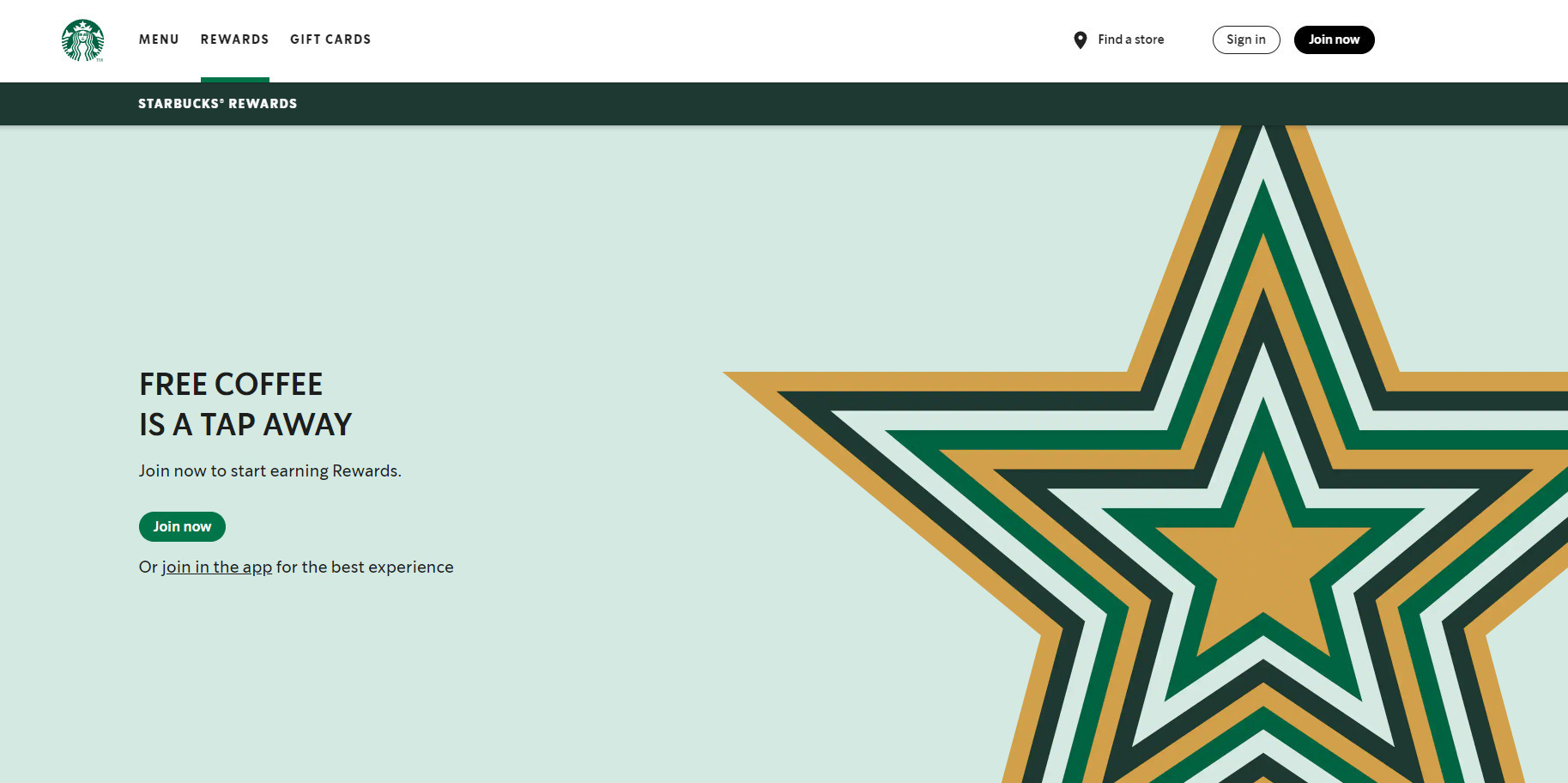
Starbucks Rewards lets customers earn Stars with every purchase, redeemable for free food, drinks, and other rewards.
The program is built around the Starbucks app, where customers customise orders, save favourites, and pay seamlessly, redeeming rewards from just 25 Stars and enjoying perks like birthday treats and Bonus Star challenges.
It works: Starbucks Rewards has grown to 34.6 million active U.S. members, who now drive roughly 57% of the chain’s U.S. sales — clear proof that a well-run rewards program lifts repeat business and revenue.
Program type: Points-based
What I’d take from Starbucks Rewards:
- Personalise through the app: let customers save favourite orders, customise drinks, and track rewards, and pair it with in-store promotions.
- Run bonus challenges: create excitement with your own version of Starbucks’ Double Star Days to boost engagement.
- Simplify ordering and payment: let customers order ahead and save payment methods so ordering on the go is effortless, especially at peak times.
4. Subway MVP Rewards
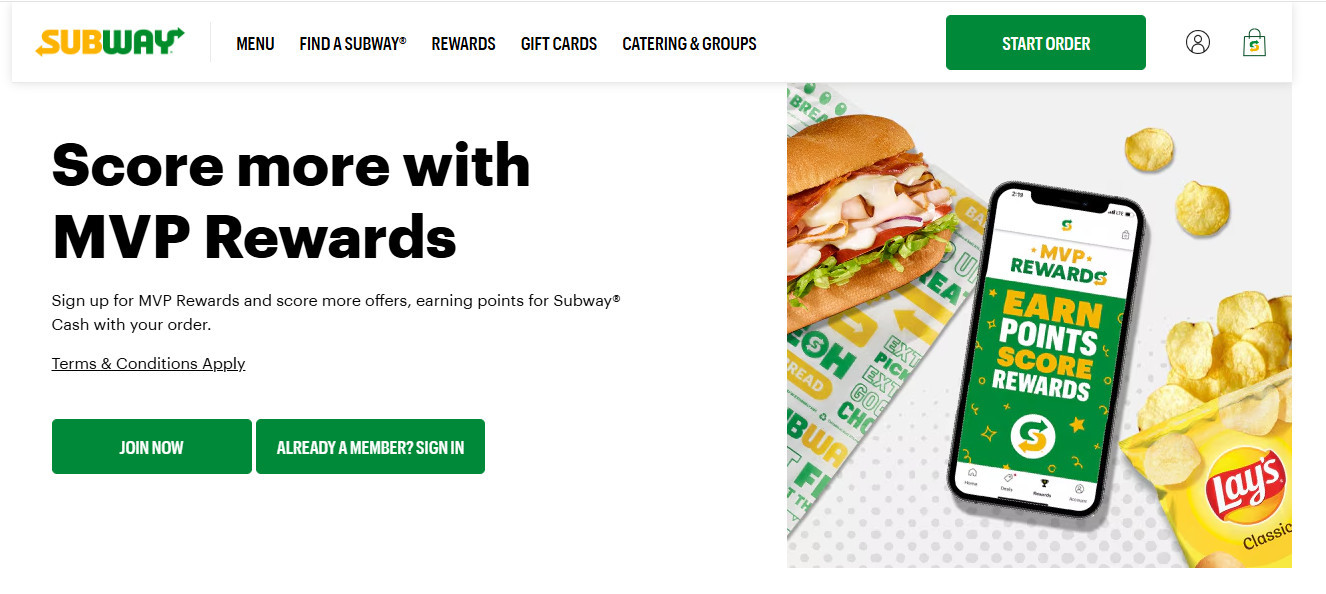
Subway’s MVP Rewards has three levels — PRO, Captain, and All-Star — that reward customers with more as they spend more (10, 11, and 12 points per dollar respectively).
Points are redeemed for free menu items, and the program is fully integrated with the Subway app for tracking, ordering, and exclusive offers. New members get a free treat for joining.
Program type: Tier-based
Our Insights on Subway MVP Rewards Program
What I’d take from Subway MVP Rewards:
- Use a sign-up bonus: offer and promote a joining reward (Subway gives new members a points bonus) both in-store and online.
- Make the app central: encourage customers to track points, order ahead, and access offers through the app.
- Reward higher tiers: build campaigns around the perks of advancing through tiers to keep members climbing.
5. Hut Rewards
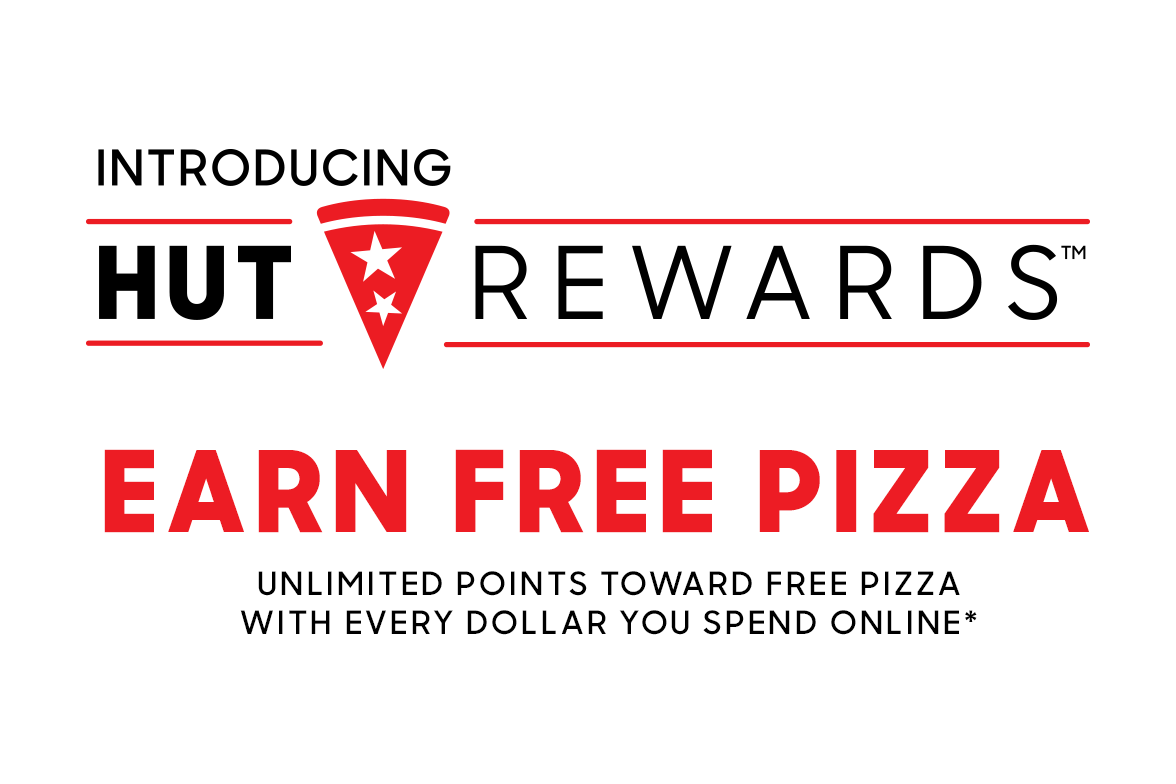
Hut Rewards lets customers earn 2 points for every $1 spent on food and drinks through online orders, redeemable for free items like breadsticks and pizza.
Members enjoy exclusive offers such as early access to new products, discounts, and birthday rewards, and the app saves payment and address details for faster checkout.
Program type: Points-based
What I’d take from Hut Rewards:
- Reward online orders: award points for every online purchase (Pizza Hut gives 2 points per $1) to steer customers to your own channel.
- Streamline online checkout: let customers save payment and address details for a faster, more convenient repeat order.
- Use member-only promotions: reserve special offers for loyalty members to make the program feel worth joining.
6. MyPanera Rewards
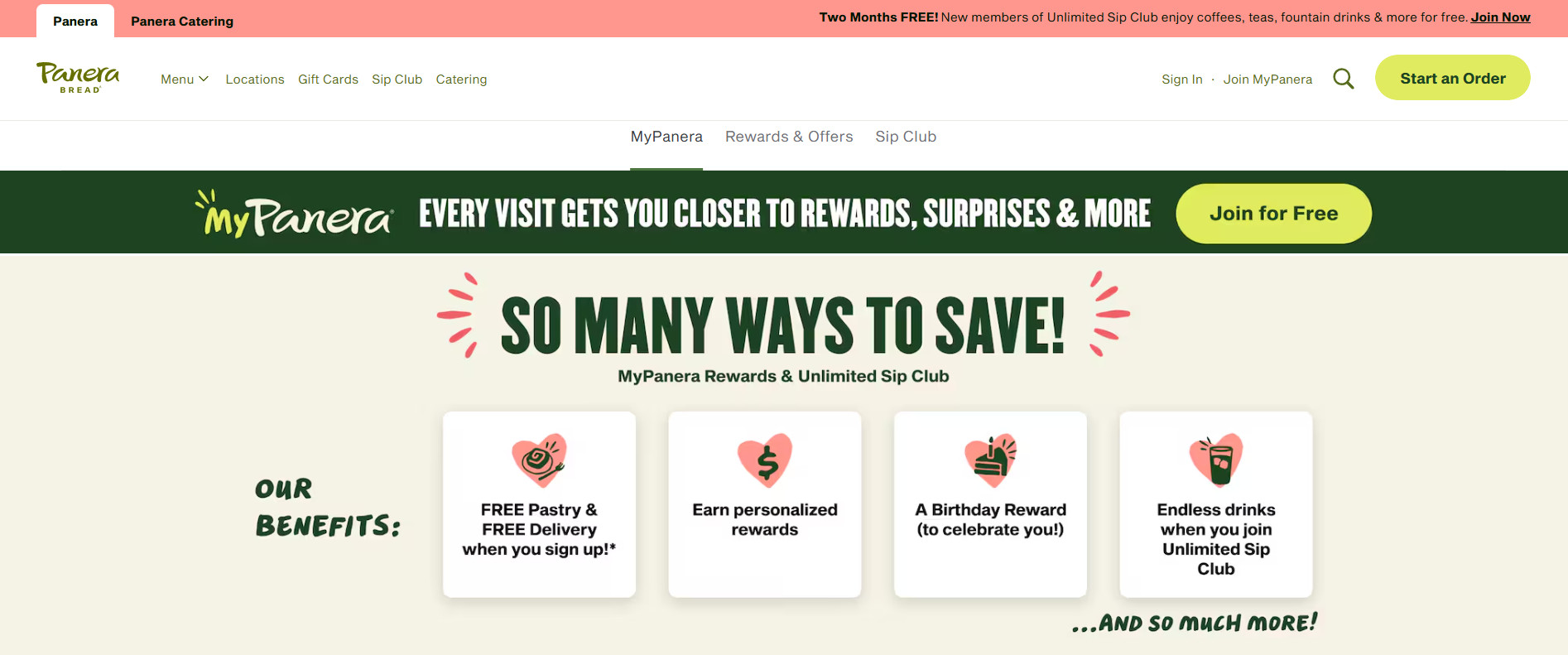
MyPanera rewards customers with free bakery items, coffee, and discounts for every in-store and online visit, plus 30 days of free delivery for new members.
For beverage lovers, the Sip Club subscription provides unlimited coffee, tea, iced coffee, lemonade, and fountain drinks for $14.99/month, with two months free for new members.
Program type: Subscription-based
What I’d take from MyPanera Rewards:
- Pair loyalty with a subscription: combine your program with a subscription perk (like Panera’s Sip Club) to add value and recurring revenue.
- Use a strong joining bonus: Panera’s 30 days of free delivery for new members attracts sign-ups and encourages immediate participation.
- Personalize communication: use text and email to keep members informed about new offers and their progress toward free items.
7. Chick-fil-A One
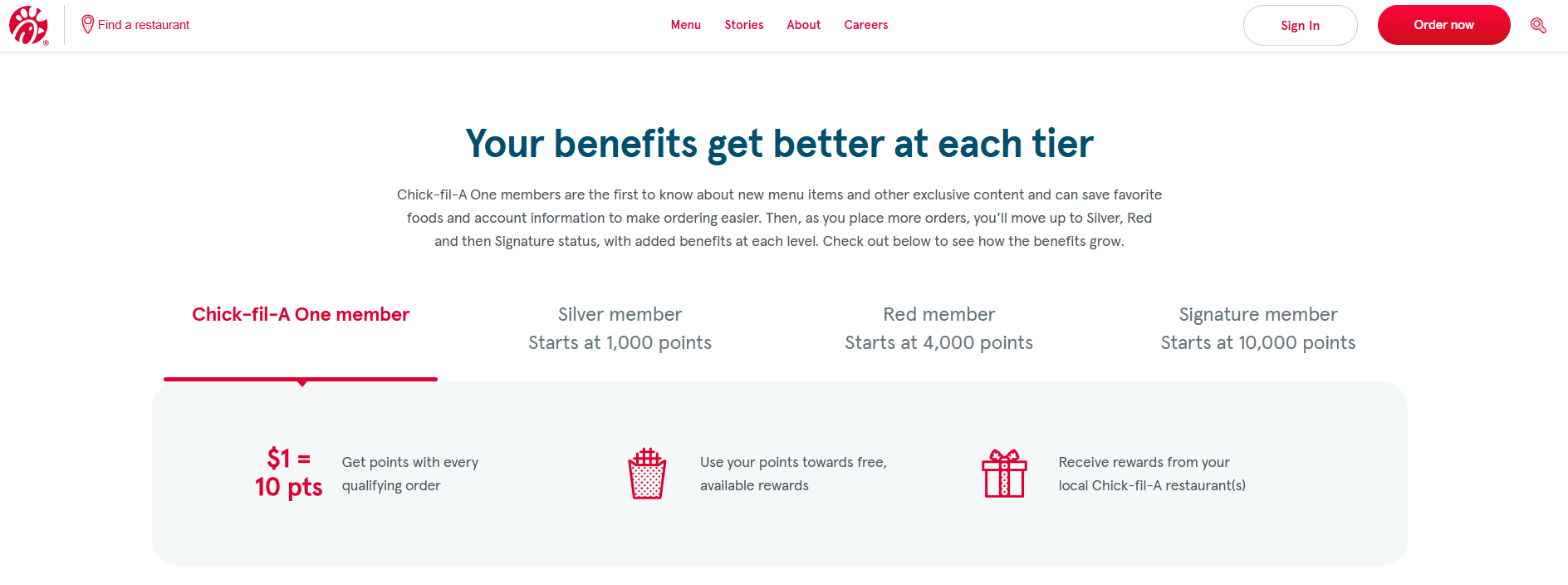
Chick-fil-A One rewards customers with points for every dollar spent, redeemable for free food and exclusive rewards, all managed through the Chick-fil-A app.
It has tiered levels — Chick-fil-A One, Silver, Red, and Signature — each offering more points per dollar and perks like gifting rewards and exclusive experiences such as Backstage Tours.
Members also get birthday rewards and personalized offers.
Program type: Tier-based
What I’d take from Chick-fil-A One:
- Use tiers to deepen loyalty: reward frequent customers with four levels, each offering more points and better rewards.
- Allow reward gifting: letting higher-tier members gift rewards (as Chick-fil-A does) adds engagement and shares your brand.
- Offer exclusive experiences: unique perks for top-tier members, like behind-the-scenes access, to deepen loyalty.
8. MyMcDonald’s Rewards
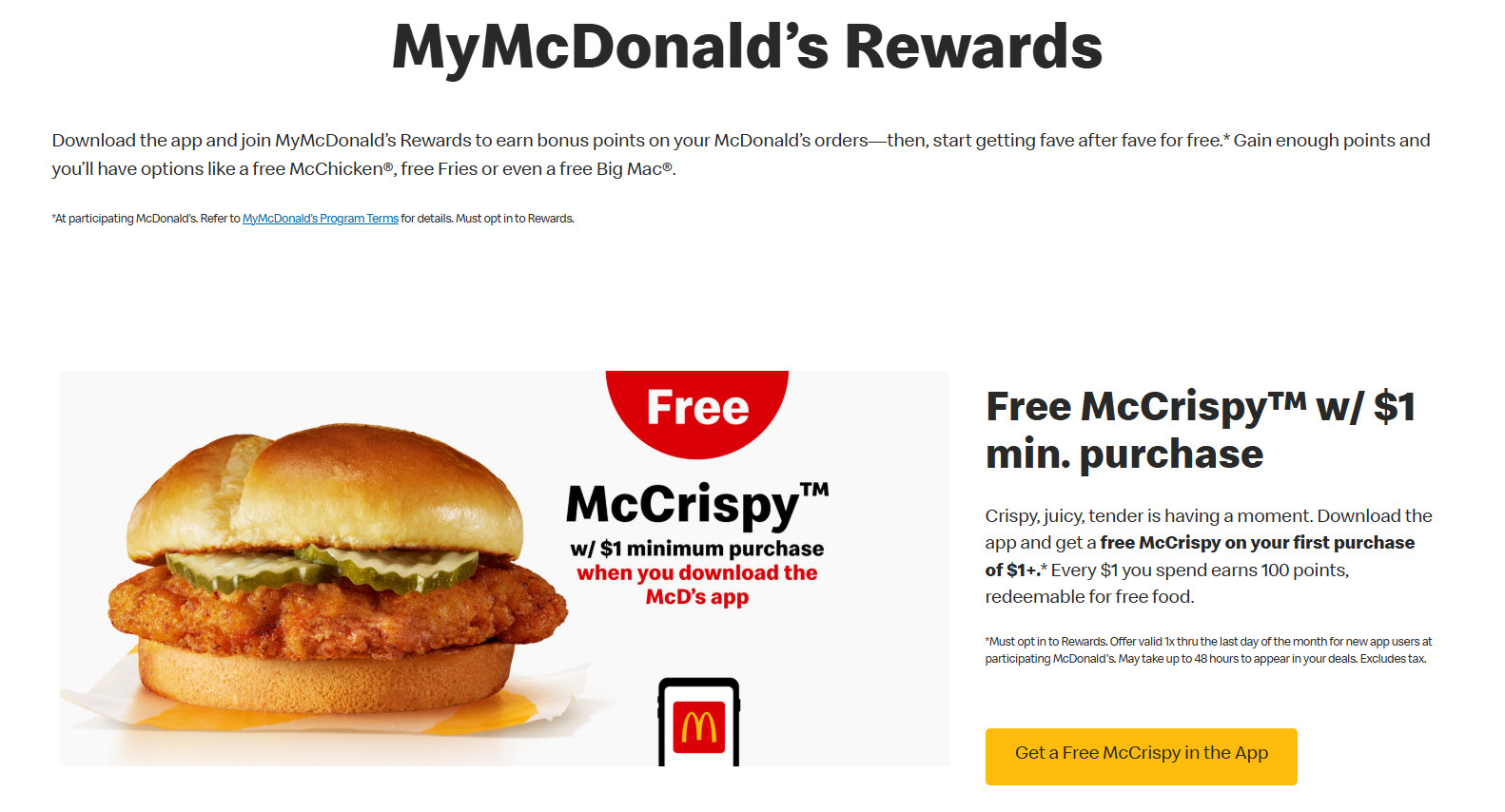
MyMcDonald’s Rewards awards 100 points for every dollar spent on eligible items; at 1,500 points, members can start redeeming free menu items.
It’s fully integrated into the McDonald’s app for tracking, ordering, and redeeming in-store, at the Drive Thru, or via kiosks. New users get 1,500 bonus points for linking a payment card.
Program type: Points-based
What I’d take from MyMcDonald’s Rewards:
- Reward sign-ups with bonus points: McDonald’s gives 1,500 points for linking a card and making a first payment — a strong, immediate incentive.
- Make earning effortless: integrate rewards into ordering so customers earn by scanning a code or tapping “Earn Points.”
- Limit redemptions to one per order: capping rewards per order creates value with each transaction and encourages repeat visits.
9. Costa Club
Costa Club rewards customers for each purchase with points redeemable for free drinks, food, and exclusive offers, tracked through the Costa Club app.
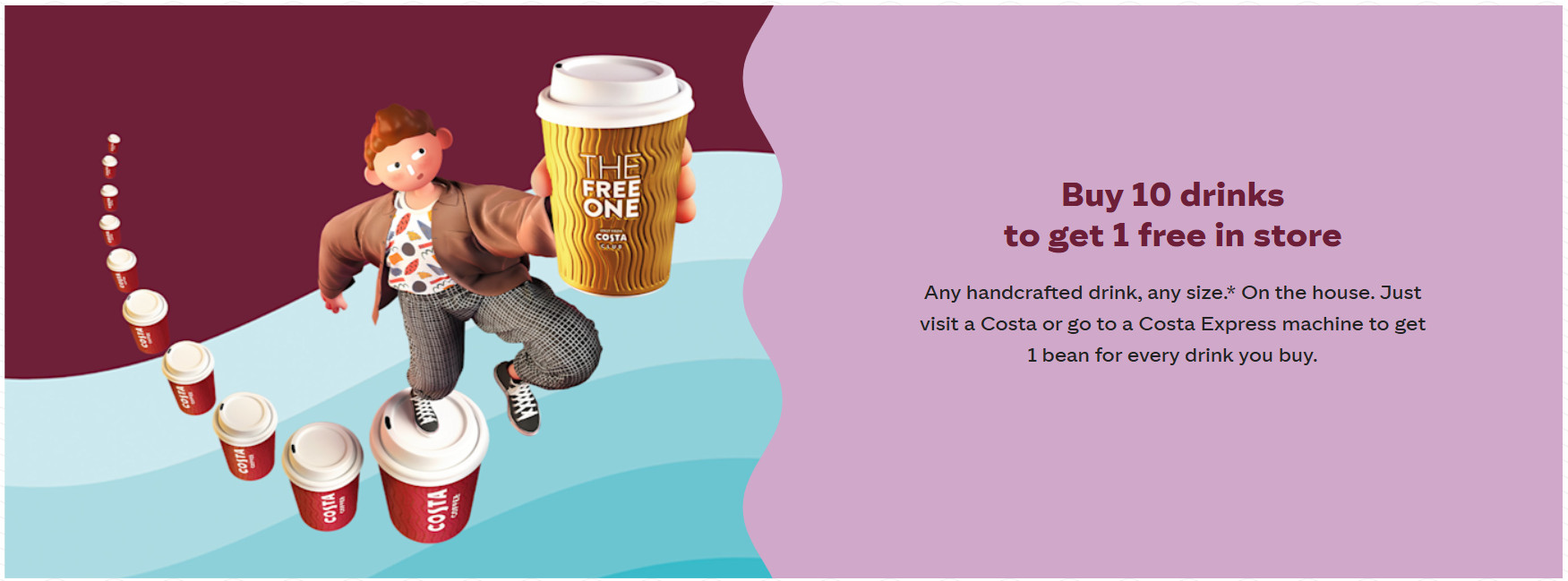
New members get a free birthday drink, extra beans for using reusable cups, and other perks, and can earn a free drink faster by buying multiple drinks or visiting Costa Express machines.
Program type: Item-based
What I’d take from Costa Club:
- Reward milestones: Costa’s “buy 10, get 1 free” makes the path to a reward clear and motivating.
- Reward sustainable habits: extra beans for reusable cups promote eco-friendly behavior while building loyalty.
- Drive engagement with promotions: “Coffee Club Days” with double points encourage frequent visits.
10. Dunkin’ Rewards
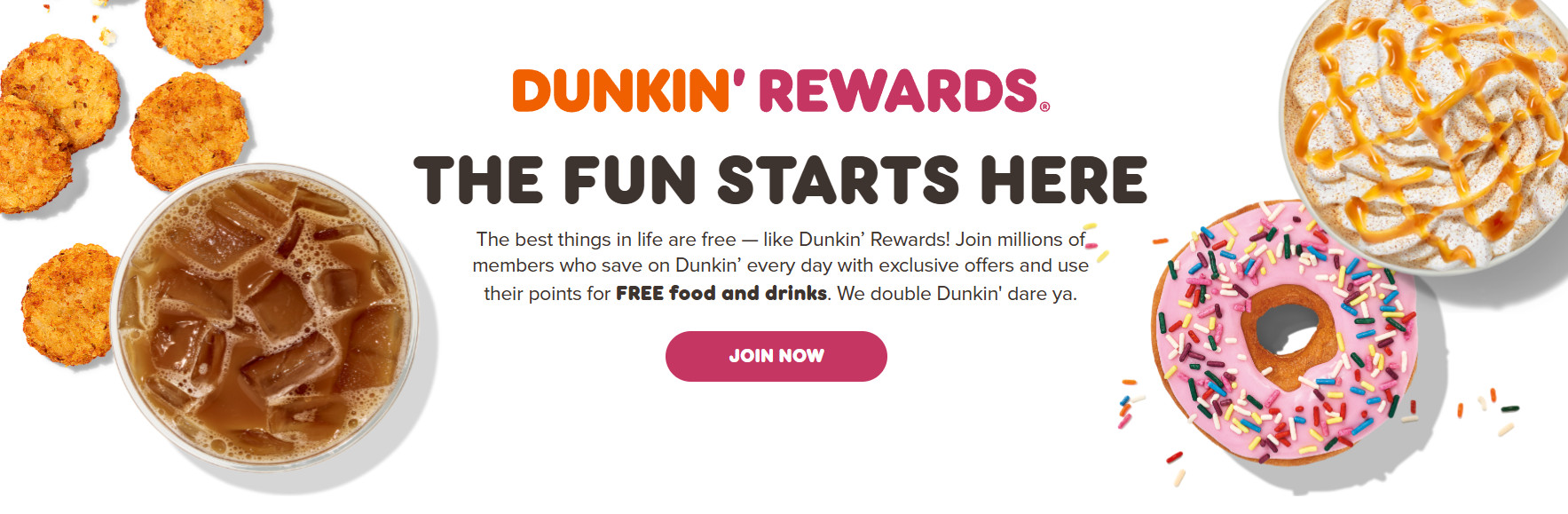
Dunkin’ Rewards, which replaced DD Perks, lets members earn 10 points for every $1 spent in-store or through the Dunkin’ app.
Members can unlock Boosted Status for frequent visits and enjoy perks like a 3X points bonus on their birthday and collectible in-app badges.
Program type: Points-based
What I’d take from Dunkin’ Rewards:
- Gamify with badges: collectible badges add fun and a sense of accomplishment that keeps customers participating.
- Reward frequency with Boosted Status: extra points for frequent visits (12 points per $1 after 12 visits in a month) drives engagement.
- Offer special perks: touches like a 3X birthday bonus add value and a personal connection.
What Are the Most Common Elements of the Best Loyalty Programs?
Improving customer retention by just 5% can increase profits by 25–95% — which is why small loyalty improvements can lead to big revenue and satisfaction gains. Here are the elements that the best restaurant loyalty programs share.
- Simplicity: customers should be able to open the app, scan a code, and have points added automatically.
- Easy redemption: collecting and redeeming rewards should be effortless.
- Exclusive rewards and perks: the best programs offer rewards, promotions, and discounts reserved for members.
- Tier visibility: in tiered programs, customers should easily see their status and what it takes to level up.
- Push notifications: integrating loyalty with a restaurant mobile app lets you send timely alerts about discounts and promotions.
- Clear program information: explain how the program works, the rewards available, and points earned, on your website and app.
- Low-cost rewards: favour high-perceived-value, low-cost items — a side salad, fries, coleslaw, or breadsticks — for a win-win.
Benefits of Restaurant Loyalty Programs
Here are the key benefits of restaurant loyalty programs and how they impact your business.
1. Loyalty programs foster customer retention
Loyalty programs are key to keeping customers coming back, and diners increasingly expect them — in a 2025 YouGov dining-out survey, 77% of diners said a loyalty program could get them to visit a restaurant more often.
By turning spending into points and rewarding milestones, restaurants give customers a concrete reason to return.
2. Rewards programs encourage larger orders
By offering points for every purchase, restaurant rewards programs motivate customers to add more menu items.
Loyalty also pairs well with suggestive selling — nudging guests to add extras and raise their total order value. Focusing rewards on your most profitable dishes maximises earnings from loyal customers.
3. Loyalty programs provide valuable customer data
Paired with a restaurant Customer Data Platform (CDP), these programs collect information like order preferences, age, and location.
Combining that with sales data, restaurant analytics, and reporting helps you spot trends and adjust your menu to boost sales.
4. Loyal customers act as advocates and refer new customers
Loyal customers bring in new guests through word-of-mouth recommendations to friends and family. Their positive experiences often lead to good online reviews — a powerful, low-cost way to attract new customers to your restaurant.
5. Loyalty programs drive sales growth
A small core of loyal regulars drives a disproportionate share of revenue — and a loyalty program is built to reward exactly those customers, turning more first-timers into repeat business.
The more loyal customers you have, the more repeat orders you generate, which lifts restaurant sales over time.
How to Select the Right Restaurant Rewards Program
Choosing the right restaurant loyalty program can improve the dining experience and save money. Use these criteria to pick the best fit.
- Dining frequency: frequent diners may prefer visit-based rewards; occasional diners may prefer long-term rewards.
- Reward type and structure: match rewards to your customers’ preferences, like discounts or free items.
- Membership requirements: check for any fees or spending thresholds before selecting a restaurant loyalty program.
- Technology and convenience: look for a user-friendly app or online platform for tracking rewards and ordering.
- Expiration and restrictions: understand the policies on points/reward expiration and any usage limits.
5 Recommended Restaurant Loyalty Software
There are many loyalty platforms on the market. While writing this guide, I researched the options that work best for restaurants, drawing on company information and restaurateur feedback. Here’s how they compare.