


Managing a restaurant comes with a fair bit of responsibility. In this article, we’re going to explore 8 best restaurant management tips managers should be aware of to succeed in the restaurant industry.
What Makes a Great Restaurant Manager?

Managing a restaurant is one of the most important roles within the restaurant industry. A great restaurant manager needs top-level communication, leadership, and organizational skills to keep their staff and customers happy.
Happy employees are good employees. Apart from the day-to-day business practices like managing budgets, marketing, monitoring cash flow, and ensuring everything runs smoothly, a great restaurant manager has a deep understanding of customer and employee needs.
Restaurant owners rely on restaurant managers to uphold high standards and promote growth. Overall, your ability to balance the needs of staff, customers, and the business creates a successful and efficient environment. But let’s dive a bit deeper.
1. Consistency in Management

Consistency is a cornerstone of your success in restaurant management. It involves maintaining uniform standards and expectations across all areas of operation.
You should seek to establish clear lines of restaurant communication so that all staff members have a complete understanding of their roles and responsibilities and are readily informed about any changes in policies or procedures. Regular meetings and feedback sessions can help address concerns and keep everyone on the same page.
2. Investing in Technology
Today’s food service industry is ridden with technology. In fact, it’s virtually impossible to perform your day-to-day operations without it. And so, in order to carry out efficient restaurant staff management while also keeping track of food quality, restaurant complaints, labor costs, food costs, and restaurant marketing, you’re going to need some serious support.
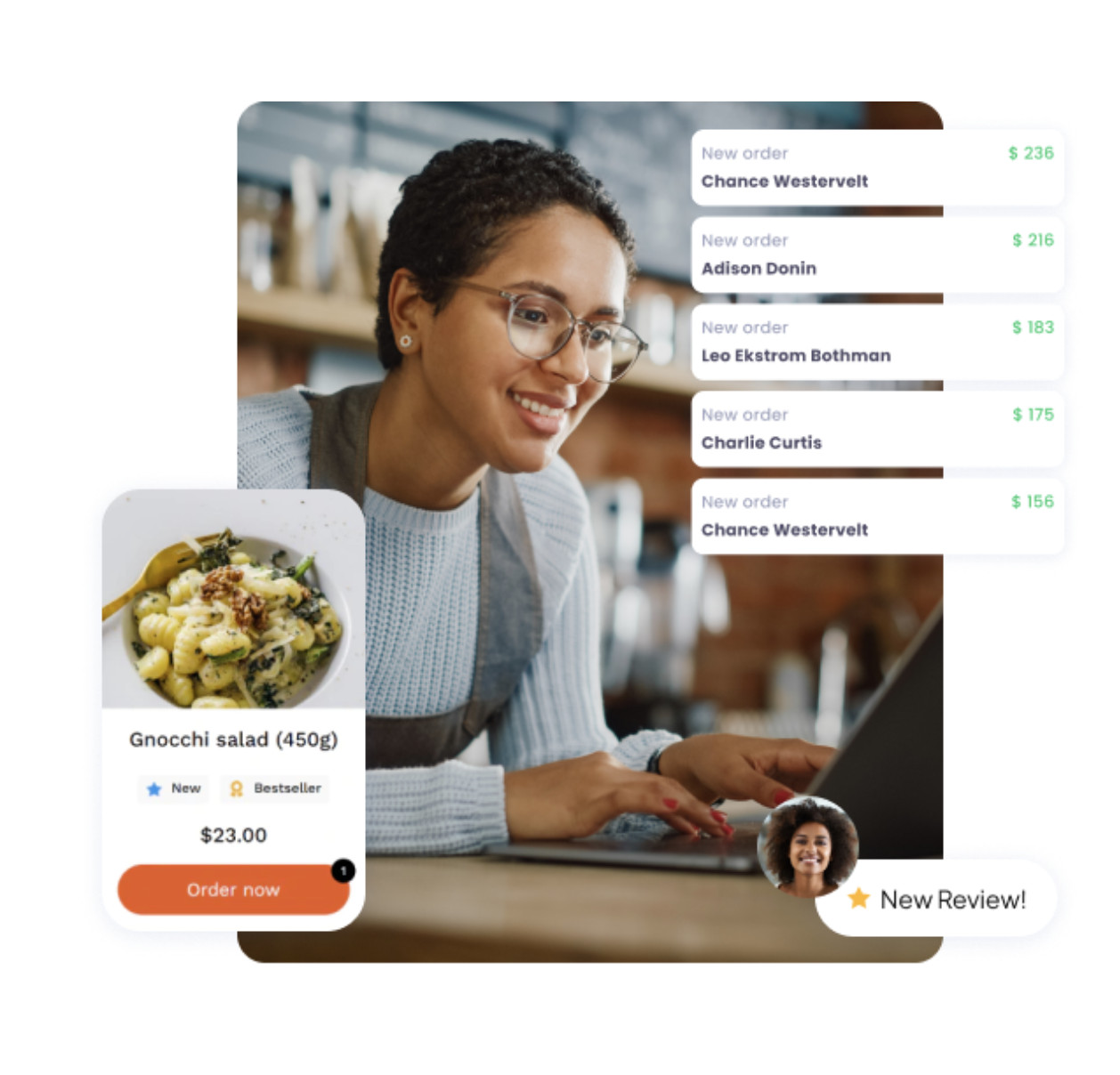
The good thing about managing a restaurant in this day and age is that you can focus on the more rewarding aspects of the job, like ensure excellent customer service, coming up with fun promotions or giving your staff more one-on-one attention so that everyone’s taken care of.
Online Ordering Systems for Improved Order Management

Roughly seventy percent of customers prefer ordering food online and want it delivered. Restaurants are somewhat forced to use multiple online ordering apps like Uber Eats, DoorDash, and GrubHub just to remain competitive. This presents a new challenge in regard to managing cash flow and keeping track of all orders.
A good solution to this challenge is incorporating a food ordering system that will allow you to:
- Sell food directly to your customers and save a lot of money on commissions.
- Manage all third-party orders in one place.
- Connect to your current POS system.

3. Food Safety and Hygiene in the Restaurant Industry
Food safety and hygiene violations can lead to fines, closures, lawsuits, or damage to your reputation. Ensure your staff is trained in proper food handling and familiar with standards set by the FDA’s Food Code and local health boards. This is a must for everyone within the hospitality industry, hospitality management in particular.
These guidelines cover hand washing, food storage and labeling, cooking temperatures, and injury handling. Although speed is essential in a kitchen, it should never compromise sanitation. Implement written policies, pre- and post-shift checklists, and comprehensive training protocols to maintain high food safety and hygiene standards. Make sure to provide your staff with a clear restaurant training manual.
4. Proactive Management

Restaurant management is not just about keeping track of revenue and meeting customer expectations. As a manager, you’re expected to keep up with the Joneses by coming up with new menu ideas, marketing strategies that will attract customers, and ways to minimize employee turnover, which can get really costly. In other words, you have to be proactive.
Anticipating Staffing Needs, Menu Updates, Marketing
In essence, you have to be capable of anticipating staffing needs based on business trends and peak periods. This includes planning for menu updates to keep your offer fresh and appealing to customers.
Staff Retention
Training new staff can be costly and slow down some of your operations. At the same time, some of the entry-level positions, like waiting, will almost inevitably have to be replaced each season.
This is simply because of the job’s seasonal nature. Half of your job is keeping a positive attitude and maximizing employee retention while also making sure you keep social media ads running in search of new employees.
Since many of the jobs in the restaurant industry are seasonal, as a restaurant manager, you’ll have to stay on top of the hiring cycles.
Strategies for Hiring and Retaining Staff

To build a reliable team, you need to implement effective hiring strategies. Look for candidates who not only have the required skills but also fit well with your restaurant’s culture. Once hired, focus on comprehensive training and development programs to ensure they are well-equipped for their roles.
6. Customer Satisfaction

One of the things that can either make or break your restaurant management career is customer satisfaction. As you probably know, when the customer is unsatisfied with the service, they’ll call for the restaurant manager, not the chef or the owner.
It’s on you to stay positive and always make sure to do everything you can to leave the customer as happy as possible without jeopardizing relationships with the staff.
Managing and Improving Customer Experience
Ensuring customers are always satisfied is no easy task; there are some things that are in your control and some that aren’t. No matter the situation, however, you’re pretty much not allowed to show any negative attitude toward the customer. A restaurant feedback system is essential to gather customer data and analyze it correctly.
Always aim to improve things that are within your control, like improving order efficiency by letting your customers pay at the table and making sure the service and food quality are absolutely top-notch. Make sure to engrave a solid work ethic that produces steady results. This goes for everyone on the team.
8. Effective Restaurant Marketing Advertising

The restaurant business has always been extremely competitive when it comes to marketing and advertising. Most restaurant management jobs will inevitably require you to understand marketing and advertising at a good level. In essence, you’re responsible for the success of your location. You basically have to be able to use all the tools at your disposal to drive more revenue and meet your restaurant goals.
Restaurant Marketing Tools
The first thing you should look into is restaurant marketing software that would allow you to carry out all, or at least the majority of, your marketing objectives in one place. In essence, you’d want something that would allow you to target your customers on multiple channels and gather customer data necessary for remarketing.


