
What Is a Pop-Up Restaurant & How To Start One
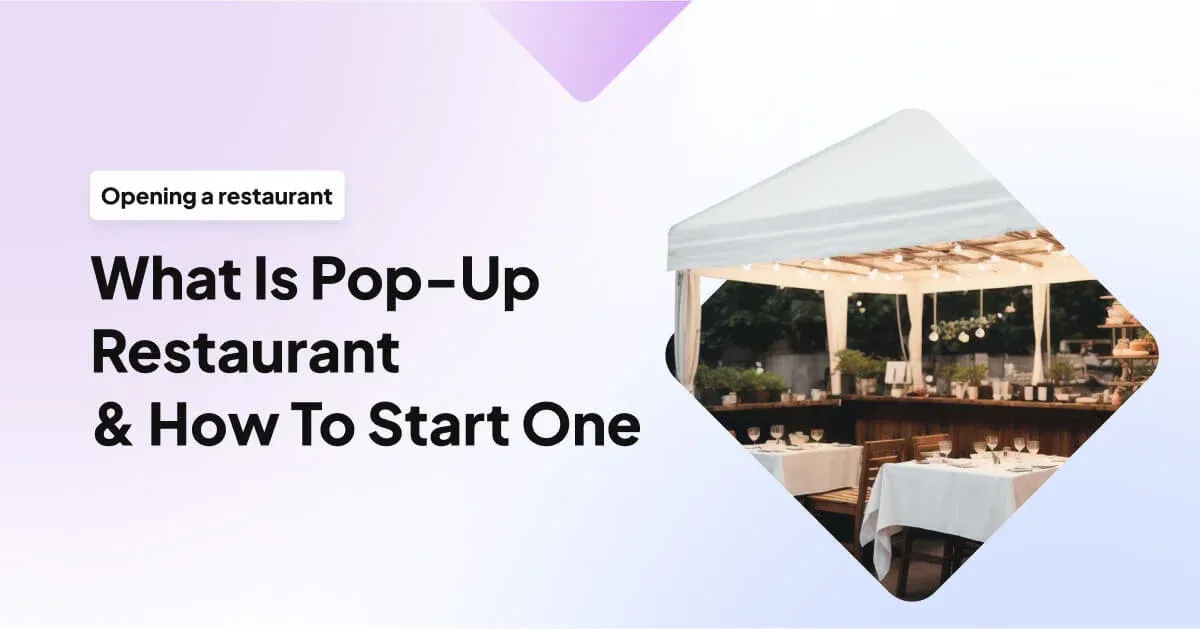
Pop-up restaurants are becoming increasingly popular in larger cities and towns and are making waves in the restaurant industry. They offer all kinds of food, from quick grab-and-go meals to fancy and expensive dishes. Pop-up restaurants are an excellent option for people who like to try new things and for chefs looking to step outside of working in a regular restaurant.
In this article, we will explain the pop-up restaurant business concept, how to open one, and what the day-to-day pop-up restaurant operations look like. We will also cover the advantages and disadvantages of opening this new business model.
What is a pop-up restaurant?
A pop-up restaurant is a new restaurant concept that is temporary. They are typically situated in unconventional spaces, such as private homes or existing restaurants. Pop-up restaurants may also operate during festivals or other events.
While pop-up restaurants became popular in Britain and Australia during the 2000s, they are not a recent trend. Pop-up restaurants have been around in the United States and Cuba as well. Customers often use social media platforms like Twitter and the blogosphere to track their movements and make online reservations to keep up with these transient dining establishments.
What are the advantages of opening a pop-up restaurant
Below, you can check the advantages of starting a pop-up restaurant
- A possibility to test new restaurant concepts or menus before making a significant investment
- Flexibility to move between cities with similar concepts or menus
- An option to assess existing skills and techniques
- Ability to try different pricing methods and check how customers react to them
- A great option to experiment with different culinary ideas
- Small losses if the concept is unsuccessful
- Reduced start-up costs due to lower overhead and labor expenses.
What are the disadvantages of opening a pop-up restaurant
- Working with limited resources and/or equipment,
- Lack of possibility to determine food and labor costs
- Working in unfamiliar locations.
- Since you are “popping up,” it is a continuous problem to have repeat customers
- You need to focus on marketing efforts (eg. social media, community building) to attract customers.
Looking for ways on how to start a pop-up restaurant? Here are a few steps that’ll help you get in the game.
Step 1. Select a pop-up restaurant concept
To begin with, you need to select a pop-up restaurant concept you are interested in. Then, consider focusing on one menu item (eg. burgers) or a specific cuisine (such as Italian food).
As you brainstorm ideas, it’s essential to research the competition and identify the potential to differentiate your concept from the existing ones. For example, a given cuisine type might be missing in your area, or there a new restaurant trend on the market that hasn’t been tried in your area.
Write down all ideas that come to your mind, and look at the competition and trends so that you can create a successful pop-up restaurant concept that will cause enthusiasm among your potential customers. This is an excellent opportunity to build something unique and create a permanent restaurant in the future.
Pop-up restaurant concept examples
Here are a few examples of successful pop-up restaurants run by young professionals that are making waves in the food industry:
Step 2. Develop a business plan for your pop-up restaurant
Step 3. Determine the location for your pop-up restaurant
Unlike traditional restaurants, there are no limits regarding choosing a pop-up location. It is possible to use the kitchen of an existing food business when it is closed. You can also start your pop-up restaurant in various non-traditional spaces, for example:
- On a city rooftop
- In a retail space that is temporarily vacant
- In a park
- In a warehouse
- In an art gallery
- Within an apartment complex
Step 4. Research the legal requirements, licenses, and permits for your pop-up restaurant
Once you choose a location, you must research the legal requirements in a chosen area. Unlike a traditional restaurant, opening a restaurant with a temporary location, requires you to obtain special permits and licenses. The specific licenses and permits required will depend on the type of pop-up concept you have and where it will be located.
Another aspect apart from obtaining restaurant licenses and permits is complying with tax and employer regulations that differ by state. Remember to:
- Obtain the required tax paperwork either by handling it in-house or through the assistance of a third-party tax professional.
- File for your DBA (Doing Business As), which is your unique trade name if applicable.
- Obtain an EIN (Employer Identification Number) if you plan to hire employees.
Step 5. Develop a marketing strategy for your pop-up restaurant
Start with creating your pop-up restaurant marketing plan.
Your pop-up restaurant offer and your target market will influence your branding, which concerns your:
- Logo and color scheme
- Decor and ambiance
- Restaurant website,
- Menu design,
- Social media,
- Plating,
- Uniforms,
- Packaging
Step 6. Determine sales projections and operating expenses for your pop-up restaurant to secure financing for your business
As we mentioned in Step 2, a part of a pop-up restaurant business plan is preparing the financial analysis and projections. Thanks to that, you can evaluate your restaurant’s future income and the average restaurant profit margin.
The cost of opening a pop-up restaurant depends on factors such as
- Pop-up restaurant location,
- Restaurant concept
- Menu
- duration of the operation.
Step 7. Create a menu for your pop-up restaurant
Start creating your pop-up restaurant menu based on your unique concept. Write down all menu ideas that come to your mind, and think if you want to offer a full food menu or, for example, daily specials. Remember that your menu is a crucial factor that will influence your customer’s decision if they want to visit your restaurant or not.
Check our guide on how to make a menu step by step. Don’t forget about menu engineering to build a profitable menu for your restaurant. Remember to create both online and offline menus. To build an online restaurant menu, you can use ready-to-use templates for menus.
Step 8. Choose a supplier of ingredients for your pop-up restaurant inventory
Once you have created a menu for your pop-up restaurant, you must choose suppliers of ingredients necessary to prepare your dishes. There are various inventory suppliers to select from, such as local suppliers, grocery stores, and warehouses. Each choice has its benefits and drawbacks, and it is crucial to carefully evaluate which option would be most suitable for your pop-up restaurant.
Numerous wholesale platforms in the food industry can be utilized for inventory sourcing. Additionally, depending on your location, you can find a variety of local retailers that offer the products you need.
Step 9. Create your pop-up restaurant website
The next step is creating a pop-up restaurant website. For that purpose, you can either hire a professional or use a restaurant website builder.
Step 10. Choose an online ordering system for your pop-up restaurant
While running a pop-up restaurant, you can also offer online ordering for your customers. You can use a food ordering system with a flat monthly fee instead of using a third-party online platform, which has high commissions.
Here is a guide on how to set up an online ordering system.
Step 11. Don’t forget about the design and atmosphere
While creating your restaurant concept, remember to think about your pop-up restaurant design and atmosphere. What colors will you use? What style would match your restaurant menu?
If you are going to work in an existing restaurant, you won’t have too much possibility to customize its interior. Contrary, in the untypical location, you will have the option to decorate it from scratch.
Step 12. Recruit and hire a pop-up restaurant team
Recruiting and hiring dependable, capable employees is crucial. Proactively searching for suitable candidates can establish a strong foundation for training, retaining, and cultivating an exceptional team. In addition, many owners may already have an existing network to tap into for hiring qualified waiters, managers, and assistant chefs.
When trying to build a team you can:
- Check industry-specific Facebook groups
- Ask your friends and colleagues
- Check on the job sites like Culinary Agents
Step 13. Open your pop-up restaurant
The final step is opening your pop-up restaurant. You followed all steps, and you are ready for this adventure. We keep our fingers crossed for your success. Over time, your pop-up restaurant may turn into a permanent location. Feel free to test different concepts, and experiment with the menu. Find your way and make your dream come true!
Frequently Asked Questions (FAQ)
A pop-up restaurant is a temporary dining establishment that is typically located in an unexpected location, such as a park or someone’s home. Pop-up restaurants are usually open for a limited period, ranging from one night to a few weeks or months, and are designed to create a sense of exclusivity and excitement among diners.
A pop-up restaurant’s profitability can vary based on various elements, including its location, menu, marketing efforts, and operating expenses. However, many pop-up eateries can make money by keeping costs low and charging top dollar for their distinctive and private dining experience.
Pop-up eateries have the advantage that they frequently don’t require as much capital as traditional brick-and-mortar eateries, such as leasing a permanent location or purchasing pricey equipment. As a result, profit margins can rise and costs might be reduced. Additionally, this business concept has been all the rage in the restaurant industry, drawing in lots of foot traffic and local influencers to nearly every business.
Pop-up restaurants frequently offer unique dishes that highlight the talents and creativity of the culinary crew. The menus are often small and focus on a set number of dishes.
The social component that pop-up restaurants offer is another distinctive feature. Diners may feel a sense of exclusivity because the restaurants are frequently only open for a short period and have limited seating. This can produce a special dining experience that goes beyond the dish itself.
Pop-up businesses provide a transient, distinctive, and exciting experience for customers as well as a tool for business owners to test out new ideas, develop their brands, and create talk about their goods or services.
Pop-up enterprises include retail establishments, eateries, nightclubs, installations of fine art, and events. They frequently run for only a short time, from a few hours to several weeks or months, and may be found in unexpected or unusual places, like outdoor areas or already occupied storefronts.
About the author

Senior Content Writer
Digital content creator with +7 years experience in marketing, helping restaurants streamline daily operations.