With over 6 years of experience in the restaurant industry, I’ve seen the fast-food sector experience incredible growth.
In 2023, U.S. quick-service restaurant sales peaked at over $490 billion, exceeding pre-pandemic levels, which highlights the vast opportunities within the industry.
In this guide, I’ll walk you through the key steps to starting your own fast-food restaurant, sharing insights and best practices to help you succeed.
Key Takeaways
- Why start a fast food restaurant now: The QSR market is projected to reach $1.93 trillion by 2032. Focus on speed, delivery, and direct online ordering to meet growing demand.
- Create a fast food business plan: Outline your concept, target market, menu, pricing, financials, and marketing strategy to guide operations and attract investors.
- Choose the right location: Select a location with high restaurant foot traffic that’s easily accessible to your target market. Consider factors like visibility, parking availability, and the proximity to competitors.
- Design a profitable menu: Create a menu that caters to customer preferences, is cost-effective to prepare, and has a strong profit margin. Focus on a few signature items and include opportunities for upselling.
- Build a restaurant website with direct ordering: Create a user-friendly website with an online ordering system. Direct ordering means lower fees and higher profits—no more paying huge Uber Eats commission or DoorDash fees.
- Create a marketing plan: Develop a comprehensive restaurant marketing plan that combines both online and offline strategies, including special promotions, loyalty programs, and local partnerships to increase visibility and engage customers.
- Become self-service: Use kiosk software or a QR code menu to turn your restaurant into a self-service experience, reducing labor costs and employee turnover.
- Start promoting your restaurant: Leverage social media platforms, email marketing, and restaurant flyers with QR codes to reach a wider audience. Use enticing visuals, special offers, and engaging content to promote your fast food restaurant and attract new customers.
What is a Fast Food Restaurant?
Fast-food restaurants are places where you can get food quickly. They serve meals that are already prepared and ready to eat. These restaurants focus on being quick and convenient, offering drive-thru or self-service options.
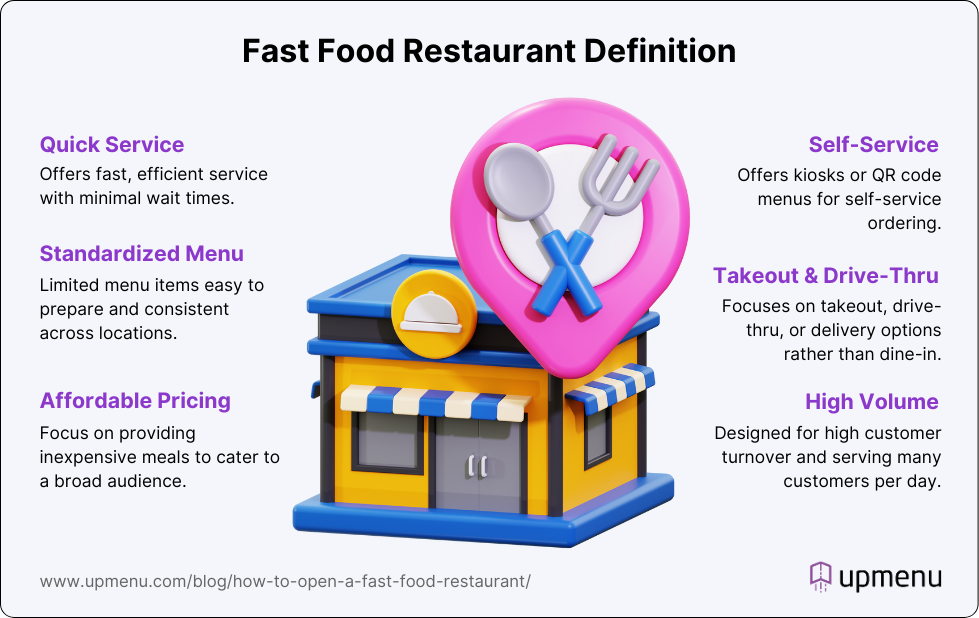
The menu of a fast food restaurant usually includes popular menu items like burgers, sandwiches, tacos, pizza, fried chicken, and other similar items. The main aim is to serve customers fast, so they can enjoy their meal right away, either on the go or in the restaurant.
- The global fast-food market was valued at USD 677.94 billion in 2023 and is expected to grow to USD 930.02 billion by 2030, with a projected compound annual growth rate (CAGR) of 4.62% from 2024 to 2030.
- U.S. quick-service restaurant sales reached over 490 billion U.S. dollars, surpassing pre-pandemic levels.
- As of 2024, Mixue Ice Cream and Tea, a Chinese brand, has overtaken both McDonald’s and Starbucks to become the world’s largest fast-food chain by number of locations, with over 45,000 stores globally.
- McDonald’s remains dominant in the U.S., with 13,622 locations as of March 2025. California leads with 1,224 locations, making up 9% of the total.
- As of 2024, there were 213,155 fast-food restaurants in the U.S., reflecting a 1.5% increase from 2023.
How to Open a Fast Food Restaurant?
With over six years of experience working with restaurants, I’ve gathered key insights and best practices to help guide you through the process of opening a successful fast-food restaurant. These steps are designed to give you a solid foundation and help you succeed.
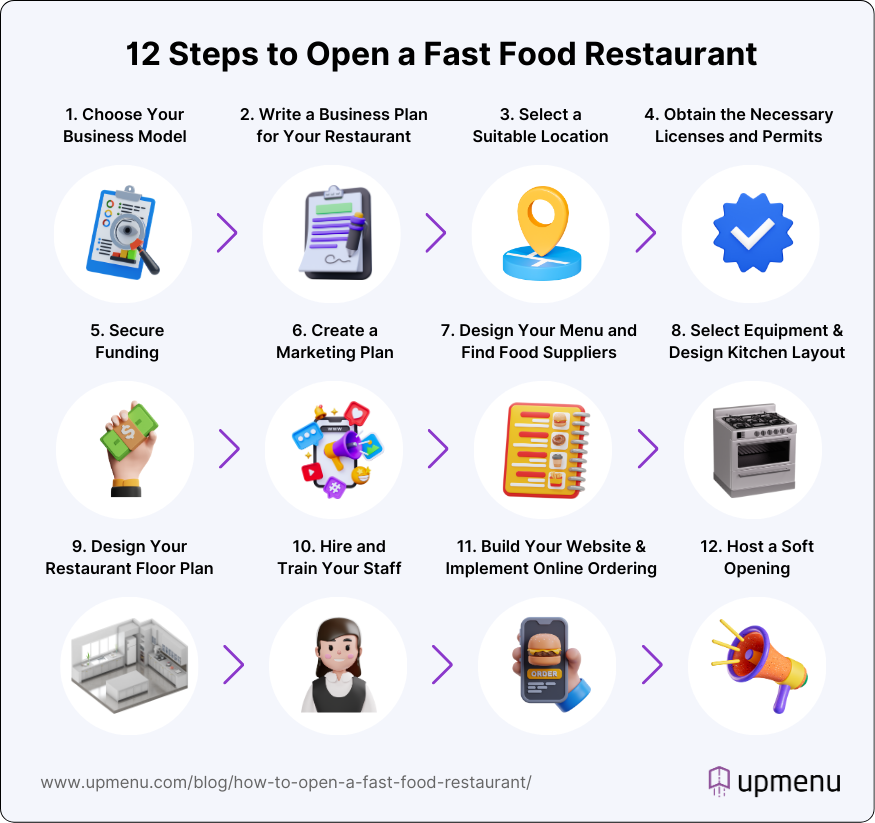
Step 1. Choose your business model
The first step of starting a fast food restaurant is deciding on the restaurant business model. A business format may be different, and it is recommended to think of the following aspects:
- Are you considering a traditional brick-and-mortar location or prefer a mobile option like a food truck business?
- What type of food are you planning to offer? (You are not limited to burgers, pizzas, and french fries, you can also sell healthy fast food options like vegan or gluten-free sandwiches or poke bowls.)
- Do you plan to offer a drive-thru service for customers?
- Do you plan to offer customers a restaurant curbside pickup?
- Will you serve traditional sit-down meals?
- Will there be a dining room?
- Will you serve customers primarily through a counter service, window, or both?
- Do you plan to play music in your fast-food restaurant? If yes, what kind of music?
- Will your restaurant have seating for customers to dine in (if yes, what will be the seating?), or will it be more focused on grab-and-go orders?
Think about your target customers and how to meet their needs and expectations.
Step 2. Write a business plan for your restaurant
Creating a detailed fast food business plan is crucial. Start by conducting market research, and analyze market trends and how competitors run their businesses.
In this stage, you need to decide on the name of your business (a restaurant name generator can help), describe your niche and target market, and include the financial business analysis and financial projections.
The financial forecast should include three key elements: a projected restaurant profit and loss statement, break-even analysis, and sensitivity analysis, all of which will give you a comprehensive financial outlook for your restaurant.
You’ll also want to include the marketing strategies you’re intending to implement. Common marketing approaches for restaurants include strategies such as prominent signage, loyalty programs, and SMS via business texting apps.
Think of all the startup costs you must cover and place them in your fast food restaurant business plan.
Step 3. Select a suitable location
Choosing the right location is a critical decision that directly impacts your business’s success, as it’s closely tied to the number of customers you will serve.
Your restaurant location strategy should focus on areas with high visibility and accessibility, making it easier for customers to find and visit your establishment.
While choosing a location for your fast food concept, take into account the following:
- Foot Traffic: Evaluate the average number of pedestrians in the area you plan to operate. High restaurant foot traffic increases the chances of attracting customers who are walking by.
- Competition: Analyze the presence of other fast-food restaurants in the local market. A high concentration of competitors might make it harder to stand out, but it could also indicate a strong demand for fast food in the area.
- Accessibility and Visibility: Ensure that pedestrians and vehicles can easily access the location. Check if it is easily noticeable from the street, and consider the availability of parking for your customers.
- Costs: Evaluate all costs related to running a business in the chosen location, including rent, utilities, taxes, labor, and other restaurant expenses. Make sure the location aligns with your budget and projected revenue.
- Infrastructure and Zoning: Confirm that the location has necessary infrastructure like electricity, water, and sewage systems. Check for zoning restrictions to ensure you can operate your restaurant, and determine if you can accommodate delivery trucks for inventory and operations.
- Growth Potential: Consider the long-term growth prospects in the area. Look for neighborhoods that are developing or undergoing planned infrastructure improvements, as these could attract more customers in the future.
For a successful fast-food restaurant, consider locations near:
- Busy streets
- Highways
- Shopping centers
- Universities
- Malls
- Colleges
Additionally, being close to other fast-food restaurants could be beneficial, as it may indicate a demand for quick dining options.
Step 4. Obtain the necessary licenses and permits
Regulations can vary by location, so check with local authorities, such as the city or county clerk, health department, and zoning department, to ensure compliance with all laws.
The most common permits and licenses you may need to include are the following:
- Business License: It allows you to legally operate a business within a specific jurisdiction.
- Food Service License: It confirms that your restaurant meets health and safety regulations and food handling, preparation, and storage standards. You can get it from the health department or relevant regulatory agency.
- Building and Zoning Permits: These might be necessary if you are constructing a new building or renovating an existing one. Zoning permits ensure that your fast-food restaurant is situated in an officially designated commercial area.
- Alcohol License: You need to obtain it if you plan to sell alcoholic beverages in your establishment
- Signage Permit: To comply with local sign regulations, including rules regarding size, placement, and lighting, you may be required to obtain a permit if you plan to install outdoor signage for your fast food restaurant.
- Employer Identification Number (EIN): You need to obtain it from the Internal Revenue Service (IRS) to hire employees. Establishing your restaurant as an official business entity is required for tax purposes.
- Music Licensing: It is necessary if you plan to play music in your fast food restaurant.
You need to create a business entity, which refers to the fast food management and ownership structure under which a business operates.
The most common business forms include:
- Sole Proprietorship,
- Partnership,
- Limited Liability Company (LLC),
- Corporation,
- Cooperative,
- Nonprofit Organization
Additionally, some businesses are required to file a DBA (Doing Business As) to use a unique name for branding or create a separate identity for a specific part of their business.
Registering a DBA helps maintain transparency, prevents customer confusion, and ensures compliance with regulations and creditor requirements.
Other formalities include:
- Opening a business bank account
- Getting a business credit card
Step 5. Secure funding
Consider the capital needed to start your fast food business, whether you’re buying a fast food franchise or launching your own restaurant.
Knowing the expected costs, you can explore various restaurant financing options, such as applying for restaurant loans and grants or opening a credit line.
Additionally, consider crowdfunding or seeking financial help from friends and family.
How much does it cost to start a fast-food restaurant?
The cost of starting a fast food restaurant depends on whether you open an independent fast food restaurant or a restaurant franchise.
The opening cost for an independent restaurant is between $175,500 and $750,500.
For a restaurant franchise, the costs vary depending on the brand. For example, the estimated initial investment for a Jack in the Box franchise ranges from $1.81 million to $4.21 million, while the startup costs for a Taco Bell franchise are between $1.2 million and $2.9 million.
If you are interested in opening a fast food franchise, explore this list of the cheapest restaurant franchises.
Step 6. Create a marketing plan
It enables you to identify your restaurant’s target audience and enhance the customer experience through tailored promotions, events, and offerings catering to their needs and preferences.
A well-designed marketing plan helps increase your restaurant’s awareness and attract more customers.
Check our guide on the best fast-food marketing strategies and learn more about how to attract new customers to your restaurant.
Step 7. Design your menu and find food suppliers
Design an appealing fast-food menu that resonates with your target audience. Start by deciding on your main menu items, desserts, drinks, and any special deals or combos.
You can also check our guide on how to make a restaurant menu.
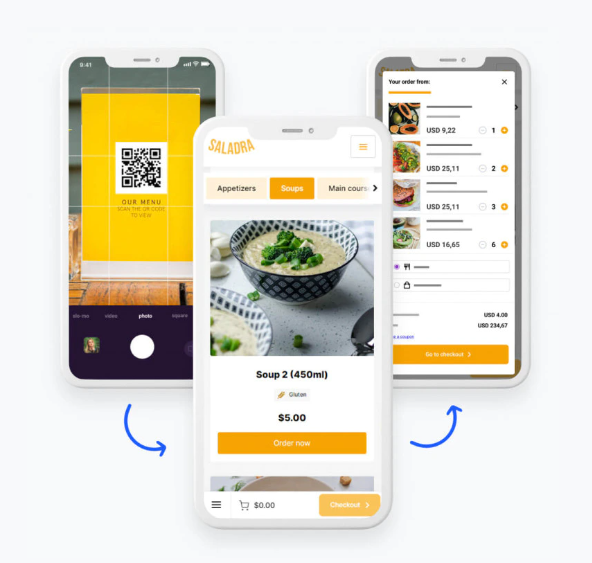
Once your menu is ready, improve its accessibility by offering a QR code menu. Use a QR code menu builder to generate codes, then place them on tables, windows, or walls, so customers can easily scan and view your menu on their phones.
Finding reliable food suppliers is just as important as crafting a great menu. The quality and consistency of your ingredients directly impact the taste of your food and customer satisfaction.
Take time to compare options and consider starting with a trial order to make sure each supplier can meet your volume needs consistently.
Consider the following aspects while looking for a partnership with a given food supplier:
- Will bulk purchasing lower the price?
- Do they offer any discounts depending on the number of ingredients ordered?
- What are the payment terms and methods?
- Does the supplier care about the environment and prioritize sustainability?
- Do they comply with food safety regulations?
- What are their delivery schedules?
- Is there a trial period before committing to the long-term?
Step 8. Select cooking equipment and design the kitchen layout
You must select and purchase equipment and design the kitchen layout to start your fast-food restaurant.
Below, I’ve prepared a restaurant equipment list you can use. Of course, depending on your establishment’s size and the food you will serve, you might need different equipment, but in general, you will need the following:
- grills
- fryers,
- ovens,
- toasters,
- microwaves
- mixers
- cutting boards,
- knives,
- slicers,
- freezers
- display cases
- beverage dispensers
- smallwares like
- bowls,
- cups
- plates,
- cutlery,
- napkins,
- straws,
- sinks,
- dishwashers,
- mop buckets,
- cleaning supplies
When designing the kitchen layout, consider using kitchen management software to optimize workflow and efficiency.
There are different types of kitchens, and for fast-food restaurants, the assembly line kitchen is most common. This type of kitchen helps streamline food preparation, with each worker performing specific tasks along the line to improve speed and efficiency.
Step 9. Design your restaurant floor plan
When starting a new fast-food restaurant, it’s essential to plan and arrange the layout of your restaurant seating and facilities.
Think about the following aspects of your new establishment:
- What will the restaurant look like from the outside?
- Will the exterior encourage people to come in and order food?
- Will customers have somewhere to sit?
- What will the atmosphere of the place be like?
- What will the music be like?
- Where can customers go to pick up food?
- Where will the drive-thru be located?
- Will you offer restaurant curbside pickup?
- What colors will be used in the restaurant?
- Will the decorations and colors encourage eating?
- What will the lighting in the restaurant be like?
Step 10. Hire and train your staff
Building a competent team is a must to run your fast-food restaurant.
Think about how you will look for your staff, how many employees you will need, and what restaurant training for your employees will be necessary.
No matter what type of fast food you are planning to serve, you will probably need the following:
- Head chef
- Line cooks
- Food runners, who bring food to diners
- Counter staff at the cash register
Step 11. Build your website and set up online ordering
When opening a fast-food restaurant, it’s essential to provide customers with the ability to check your offers online.
In fact, 77% of diners report that they search for restaurant information online and visit a restaurant’s website before deciding to visit or order from the restaurant.
According to the same survey, 69% of diners say a restaurant’s website influences their decision to dine in, while 43% visit the site to determine whether they want to order takeout or delivery.
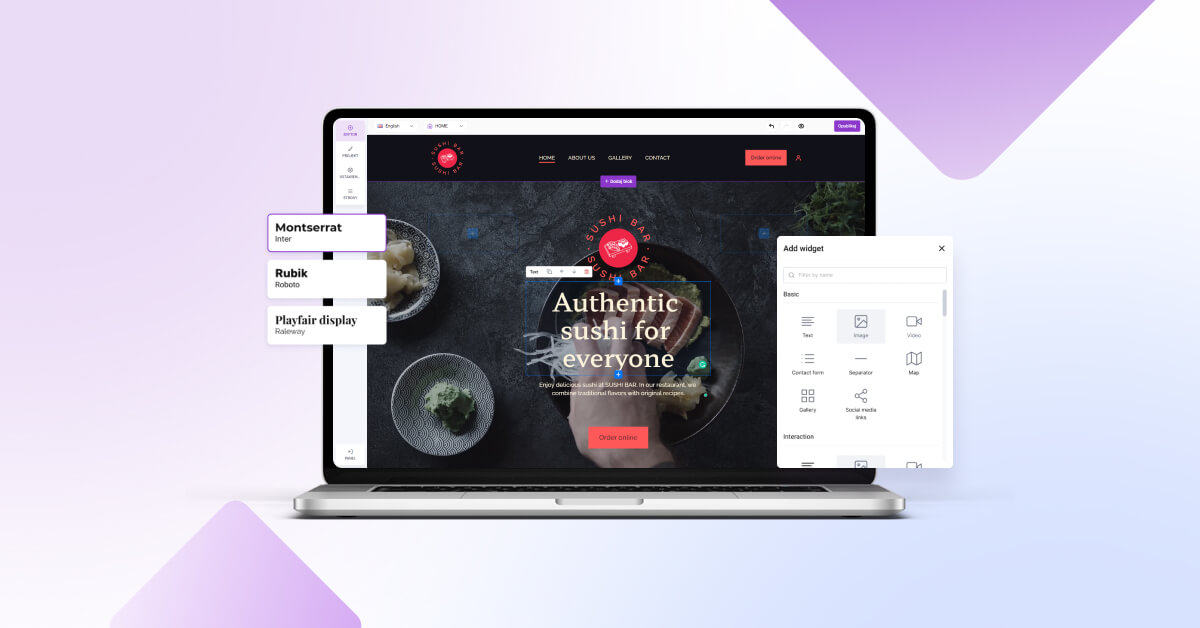
That’s why I highly recommend creating a restaurant website with online ordering. To do this, you can use a ready-to-use tool like a restaurant website builder, choose a fast-food restaurant template, upload your products with photos, and customize your website.
Once you create your website, you can enable online orders. To do this, use a fast food automated ordering system to reach more potential customers.
- According to our data, restaurants experience a 34% increase in sales after switching to UpMenu’s online ordering system, along with a significant reduction in reliance on third-party platforms.
- Our customers save up to 90% on third-party commission fees after switching to UpMenu, compared to using third-party platforms.
Learn more about how to create a restaurant website and how to set up an online ordering system.
If you are looking for inspiration, check the examples of the best restaurant websites.
Step 12. Promote your new fast food restaurant
Effectively promoting your fast-food restaurant is crucial for attracting customers and building brand awareness. For example, studies show that more than 70% of customers are more likely to visit a restaurant that offers personalized promotions.
To successfully promote your fast-food restaurant, consider the following strategies:
- Offer Promotions and Discounts: Attract new customers and retain existing ones by providing limited-time offers, restaurant discounts, and combo deals.
- Use Social Media: Use platforms like Facebook, Instagram, and Twitter to engage with your audience, share food photos and promotions.
- Create a Loyalty Program: Encourage repeat business by offering rewards, discounts, or special deals to loyal customers via a restaurant loyalty program.
- Invest in Local Advertising: Use local media channels such as newspapers, radio, and community events to reach potential customers in your area.
- Optimize Your Online Presence: Ensure your restaurant’s website is user-friendly, mobile-responsive, and optimized for search engines to increase visibility.
- Engage in Community Events: Participate in local events and sponsor community activities to build brand recognition.
- Consider Cooperation with Influencers: Leverage restaurant influencer marketing to reach new audiences and boost your restaurant’s credibility through social media endorsements.
To sum up, you can effectively increase your restaurant’s reach, attract more customers, and grow your business by implementing these fast food marketing strategies.
- Start with deciding on your restaurant concept
- Develop a fast food business plan
- Find a suitable location
- Take care of all permits and licenses
- Secure funding
- Develop a marketing strategy to attract diners
- Design a menu and search for food suppliers
- Purchase cooking equipment and design your kitchen layout
- Design your floor plan
- Build a competent team
- Create a fast-food restaurant website with online ordering
- Promote your fast food restaurant