
Indian Restaurant Business Plan: Template & Example
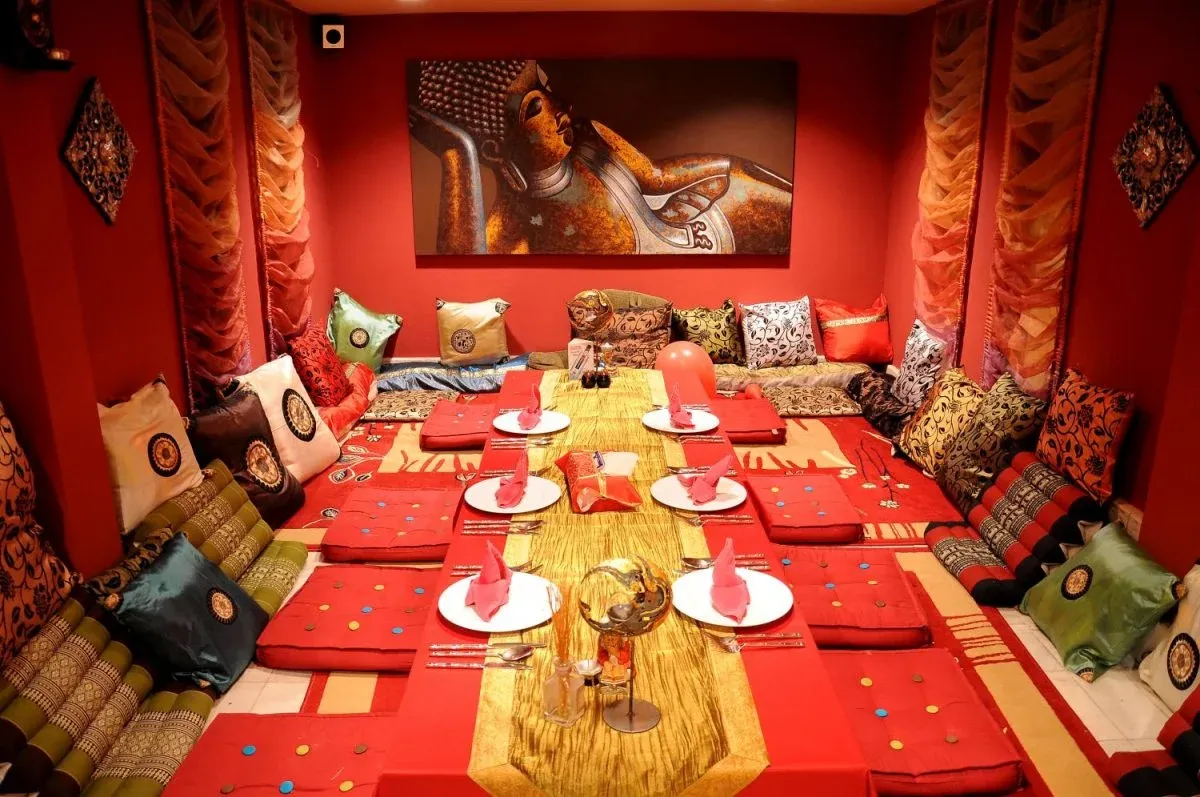
An Indian restaurant business plan is a written roadmap covering your concept, menu, target market, location, marketing, team, and financial projections — the document investors and lenders read before they decide to fund you.
In this guide I’ll walk you through it section by section, build a full worked example for a fictional restaurant, and show you a startup-cost and first-year profit model based on current U.S. benchmarks.
Indian Restaurant Business Plan Template
Use the free template below — it mirrors the eight sections in this guide, with prompts and the financial tables ready for you to fill in.
An Indian restaurant business plan is a written roadmap covering your concept, menu, target market, location, marketing, team, and financial projections — the document investors and lenders read before they decide to fund you.
In this guide I’ll walk you through it section by section, build a full worked example for a fictional restaurant, and show you a startup-cost and first-year profit model based on current U.S. benchmarks.
1. Executive Summary
The executive summary is the condensed version of the whole plan — written last, but read first. In one page, state your concept, the market gap, your team’s edge, and how much funding you need and why.
Investors often decide whether to keep reading based on this section alone, so treat it as a pitch, not a preamble.
For structure and examples, see our restaurant executive summary guide.
2. Concept, Vision & Mission
This is where you define what makes your restaurant distinct.
For Indian concepts, positioning usually comes from three levers: region (North vs. South Indian, or a deliberate blend), format (fine dining, fast-casual, or buffet-led), and dietary strength (Indian cuisine’s built-in vegetarian and vegan advantage).
Tie your concept to a one-line mission a customer would actually recognize in the dining room; our restaurant mission statement examples can help you phrase it.
2. Concept, Vision & Mission
This is where you define what makes your restaurant distinct.
For Indian concepts, positioning usually comes from three levers: region (North vs. South Indian, or a deliberate blend), format (fine dining, fast-casual, or buffet-led), and dietary strength (Indian cuisine’s built-in vegetarian and vegan advantage).
Tie your concept to a one-line mission a customer would actually recognize in the dining room; our restaurant mission statement examples can help you phrase it.
3. Market & Competitor Analysis
Show that you understand your catchment: local demographics, foot traffic, dayparts, and the restaurants already competing for the same wallet.
Ground it in the bigger picture, too — the U.S. Indian restaurant market is worth around $4.9 billion and is highly fragmented, with no single operator holding more than 5% share (IBISWorld).
In my experience that fragmentation is the real opportunity: unlike burgers or pizza, Indian dining is won locally, so you don’t have to beat a national chain — just the two or three Indian restaurants already in your neighborhood.
Demand has a demographic tailwind, too, with Indian-Americans the second-largest Asian-American community at about 4.4 million people and Indian food’s appeal reaching far beyond that base.
Turn all of it into a local number, then keep the analysis honest with a simple SWOT; our restaurant SWOT analysis guide covers how.
SWOT analysis for Brindlewick (example restaurant):
Strengths | Weaknesses |
|---|---|
Vegetarian-forward menu; direct-ordering technology; lunch-buffet volume | New, unknown brand; limited parking; reliance on skilled tandoor labor |
Opportunities | Threats |
Fragmented market with no dominant chain; rising demand for Indian food | Ingredient (paneer/ghee) inflation; 15–30% third-party delivery commissions |
4. Menu & Pricing
Your menu is the plan’s centerpiece, so decide your revenue model early. Most independent Indian restaurants run buffet and à la carte.
A fixed-price weekday lunch buffet drives midday volume and gives you a predictable food cost per cover — as long as you control waste ruthlessly. À la carte dinner and delivery protect your margin per dish and let signature items shine.
Running both lets the buffet fill slow lunch hours while à la carte and delivery carry the evenings.
Pricing: Price against a target food cost of roughly 28–32% of sales, and watch proteins and dairy closely — paneer, ghee, and specialty rice move with commodity prices, so don’t lock a full year of menu prices blind.
5. Location & Operations
Describe the space — size, seat count, condition, parking, foot traffic — and then the operational backbone that makes it run.
Indian kitchens have specific needs worth naming in the plan: a tandoor with proper exhaust, ample cold storage for prepped sauces and dairy, and disciplined inventory for a spice-heavy pantry.
Spell out your systems, too. A restaurant POS that handles dine-in, buffet, and takeout in one place keeps labor and reporting under control — and investors like seeing you’ve thought about it.
6. Marketing Plan
Cover how you’ll fill seats — and, just as importantly, how you’ll own the customer. The biggest margin decision in the whole plan is direct vs. third-party orders.
Our commission-free online ordering and a branded mobile app let you keep the revenue and the customer data that delivery apps otherwise take a cut of. Pair that with a loyalty program to turn first-time diners into regulars.
Then plan your launch tactics — grand-opening event, local press, geo-targeted social ads — with a real budget line attached to each, not just a wish list.
7. Team & Management
Describe who you’ll hire and how the place will actually be run.
Your hardest-to-replace hire is a skilled tandoor and curry chef, so name the role, the pay band, and your retention plan explicitly — investors know kitchen turnover is what quietly sinks Indian concepts.
Then state who manages day-to-day operations and how decisions get made, so there’s no ambiguity about accountability.
8. Financial Plan
This is the section investors scrutinize most, and in my experience it’s the one first-time owners under-build. Give them two concrete things: a startup budget and a first-year P&L.
The median cost to open an independent U.S. restaurant is about $375,500, with full-service concepts closer to $475,500 — but the honest number depends on size, market, and whether you inherit a working kitchen.
Always add a 10–20% contingency and budget three to six months of working capital before you open. Here’s a realistic startup budget for our 45-seat example.
Brindlewick startup budget (illustrative)
Startup Line Item | Estimate (USD) |
|---|---|
Leasehold build-out & décor | $95,000 |
Kitchen equipment (tandoor, exhaust, cold storage, line) | $70,000 |
Furniture, seating, POS hardware | $22,000 |
Licenses, permits, insurance | $15,000 |
Initial inventory (spices, dairy, proteins) | $12,000 |
Pre-opening marketing & grand opening | $10,000 |
Working capital (3 months of fixed costs) | $60,000 |
Contingency (~15%) | $36,000 |
Total | ~$320,000 |
Once you’re open, profitability comes down to two ratios. Keep food cost near a third of sales and hold prime cost (food + labor) between 55% and 65% — the range the National Restaurant Association’s 2026 State of the Industry report associates with profitable full-service operators — and you land in the 3–8% net-margin band that’s typical for full-service restaurants.
Here’s a conservative first-year P&L for Brindlewick example:
Line | Year 1 (USD) | % of Sales |
|---|---|---|
Revenue | 720,000 | 100% |
Food & beverage cost | 216,000 | 30% |
Labor | 252,000 | 35% |
Prime cost | 468,000 | 65% |
Rent | 72,000 | 10% |
Other operating expenses | 158,000 | 22% |
Net profit | ~22,000 | ~3% |
A first year at the low end of the margin band is normal. Year two is usually where owning your direct orders — and skipping the 15–30% delivery commission on each one — moves net margin up.
For the technology side of the budget, see our breakdown of restaurant POS system costs.
What Makes Indian Restaurants Different
Three things separate a real Indian concept from a generic restaurant plan — and demand backs them up, with the global Indian restaurant market projected to grow from about $78 billion in 2024 to $147 billion by 2033.
- Vegetarian & vegan = margin, not a checkbox: Indian food is plant-first (about 39% of Indians are vegetarian and 81% limit meat), and lentil, chickpea, and paneer dishes are your lowest-cost, highest-margin items. Give them a named menu section, not a footnote.
- Name your region: Demand is shifting toward hyper-local cuisines like Malvani, Chettinad, and Assamese. “North Indian,” “South Indian,” or a deliberate blend reads as a concept; “authentic Indian” reads as generic.
- Add a small fusion section: Indian-Western hybrids like tandoori pizza and butter chicken pasta are trending and pull in diners who think they don’t like Indian food (Accio India Food Trends) — a bigger addressable market, without diluting your core.
Frequently Asked Questions (FAQ)
Full-service restaurants typically net 3–8%. Profitability depends on holding prime cost (food + labor) to 55–65% and driving direct, commission-free orders.
Around 28–32% of sales is the benchmark; watch paneer, ghee, and specialty-rice prices closely.
The median independent U.S. restaurant startup is about $375,500, with full-service concepts closer to $475,500. Indian concepts add a tandoor, exhaust, and spice inventory; always add a 10–20% contingency.
About the author

Marketing Manager
Leads UpMenu's marketing and helps restaurants grow. Writes about restaurant marketing, branding, websites, menu design, and opening a restaurant — from pizzerias and food trucks to coffee shops and ghost kitchens. Digital marketer driven by data and AI — for 6+ years working with restaurants.